Skip to content
Fleet Management Software

FASTag Toll Leakage: The Hidden Cost Eating Into Fleet Margins

Toll overpayments and FASTag discrepancies can quietly increase fleet operating costs. Learn how automated toll reconciliation can help logistics businesses detect leakage and control route costs.

KO Fleetz Admin8 October 20268 min read
FASTag Toll Leakage: The Hidden Cost Eating Into Fleet Margins
On this page

Your Fleet May Be Losing Money at the Toll Gate

Fuel isn't the only operational expense that can quietly reduce fleet margins.

Toll expenses can become a hidden revenue leak.

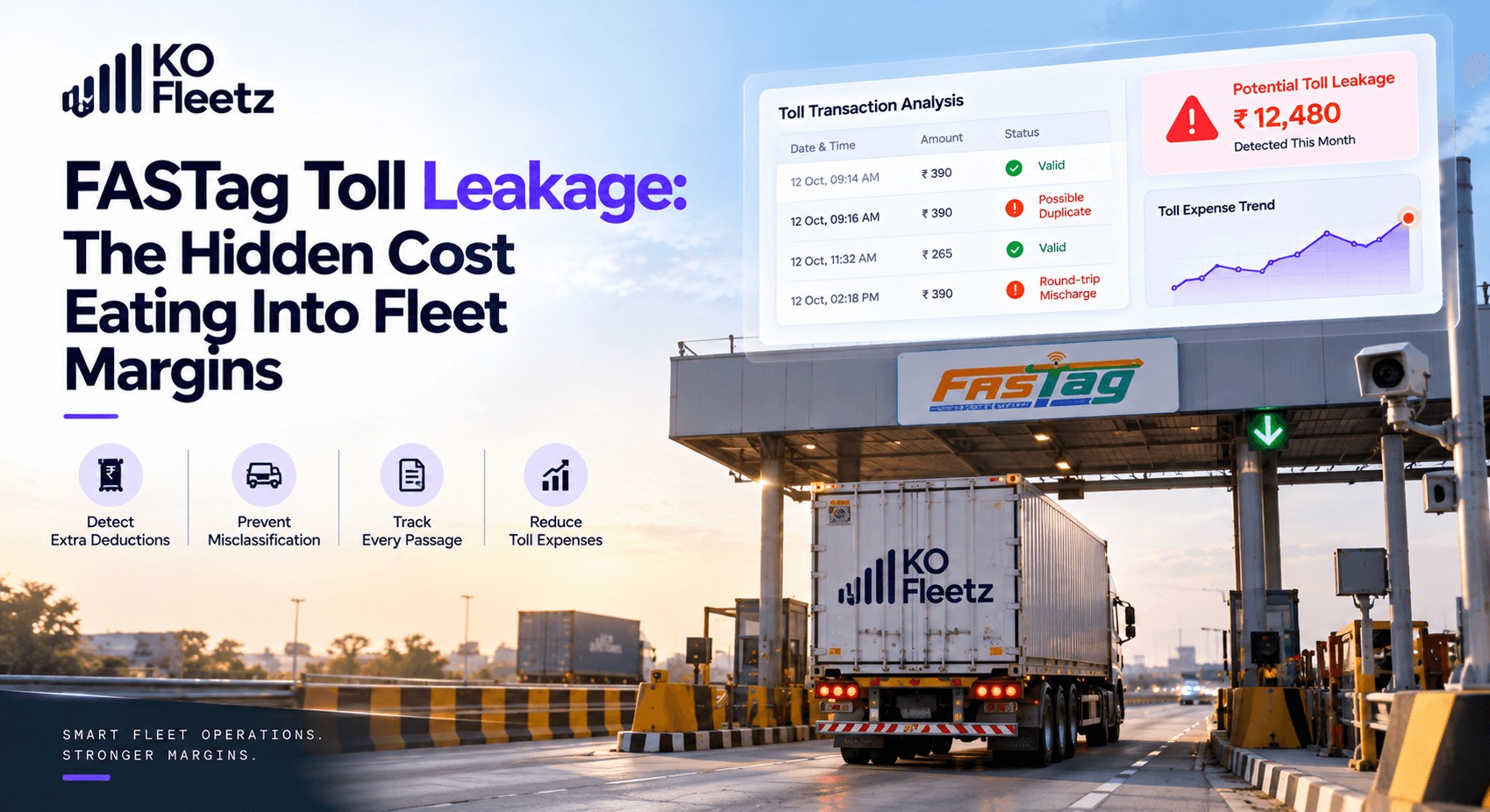
For commercial fleets operating dozens or hundreds of routes every day, small FASTag discrepancies can accumulate into significant costs. Duplicate deductions, incorrect vehicle classifications, missed return-trip benefits, and unauthorized toll transactions can remain unnoticed until month-end reconciliation.

By then, the money is already gone.

A modern fleet toll management system can help businesses identify these discrepancies earlier by connecting toll transactions with vehicle movement, route data, and operational expenses.


What Is FASTag Toll Leakage?

FASTag toll leakage occurs when a fleet pays more toll expense than it should because of transaction errors, incorrect deductions, route inefficiencies, or unauthorized toll activity.

Common examples include:

  • Duplicate FASTag deductions
  • Incorrect vehicle classification
  • Unexpected toll transactions
  • Full-rate charges on eligible return trips
  • Toll transactions without corresponding vehicle movement
  • Unauthorized vehicle usage
  • Route deviations through expensive toll corridors
  • Manual reconciliation errors

When these transactions happen across hundreds of trips, even small discrepancies can affect the overall cost per kilometer.


Why Is Manual Toll Tracking a Problem?

Many fleet operators still depend on bank statements, FASTag portals, spreadsheets, or manual reports to track toll expenses.

The problem is that toll data is often disconnected from operational data.

A finance team may know that a toll was deducted.

But can they quickly answer:

Was the vehicle actually there?

Was the correct toll amount charged?

Was the vehicle classification correct?

Was the transaction associated with the right trip?

Was the route unnecessarily expensive?

Without connecting toll transactions with GPS and trip information, identifying these discrepancies becomes difficult.


What Are the Most Common FASTag Toll Errors?

1. Duplicate Toll Deductions

A vehicle may appear to have multiple toll deductions associated with a journey.

Without automated reconciliation, identifying duplicate transactions can take significant manual effort.

2. Incorrect Vehicle Classification

Different vehicle categories can have different toll rates.

If a vehicle is incorrectly classified, the resulting overcharge can directly increase transportation costs.

3. Missed Return-Trip Benefits

Some toll corridors offer discounted or return-trip rates under applicable conditions.

If eligible transactions are not properly identified, fleets may end up paying the full toll rate.

4. Unauthorized Toll Transactions

A toll transaction without a corresponding trip or GPS movement can indicate unauthorized vehicle usage, incorrect mapping, or a transaction that requires investigation.

5. Expensive Route Selection

Sometimes there is no transaction error at all.

The real problem is the route.

A fleet may consistently use a highway corridor with higher toll costs when an alternative route could reduce total trip expenses without creating unacceptable delays.


How Does Automated Toll Reconciliation Work?

Automated toll reconciliation compares toll transaction information against actual fleet movement and trip data.

Instead of looking at toll transactions in isolation, fleet managers can evaluate:

FASTag transaction + Vehicle + GPS location + Timestamp + Trip + Route + Toll amount

This creates a clearer picture of what actually happened during a journey.

For example:

FASTag shows a toll deduction at 10:42 AM.
GPS data shows the vehicle was 18 km away from the toll plaza at that time.

That transaction immediately becomes worth investigating.

This is where toll audit automation becomes valuable.


How Can Fleet Management Software Reduce Toll Leakage?

A modern fleet management software platform can connect toll information with broader fleet operations.

1. Automated Toll Reconciliation

Compare FASTag transaction records with GPS location and timestamps to identify potential discrepancies.

2. Overcharge Detection

Flag transactions that appear inconsistent with expected toll amounts, vehicle classifications, or trip information.

3. Double-Deduction Alerts

Identify potential duplicate toll transactions so fleet and finance teams can investigate them quickly.

4. Toll Expense Analytics

Analyze toll spending across:

  • Vehicles
  • Routes
  • Trips
  • Locations
  • Time periods
  • Cost centers

This helps fleet managers understand where toll expenses are increasing.

5. Route Cost Analysis

Compare route distance, travel time, fuel consumption, and toll expenses to identify more cost-effective routes.

The cheapest route is not always the shortest route.

The goal is to understand the total cost of the trip.


Toll Cost vs Total Trip Cost

A route with lower toll charges may still be more expensive if it results in higher fuel consumption, longer travel time, or increased vehicle wear.

That is why fleet cost optimization should consider multiple variables together.

Cost FactorWhat to Analyze
TollToll charges and transaction frequency
FuelFuel consumption and fuel cost
DistanceTotal kilometers travelled
TimeTrip duration and delays
MaintenanceVehicle usage and maintenance impact
RouteToll-heavy vs alternative corridors

This creates a more complete view of transportation cost management.


What Should Fleet Managers Monitor?

A strong toll expense management strategy should track more than total toll spending.

Key metrics include:

  • Toll cost per trip
  • Toll cost per kilometer
  • Toll cost by vehicle
  • Toll cost by route
  • Toll transactions per vehicle
  • Duplicate transactions
  • Suspicious transactions
  • Vehicle classification discrepancies
  • High-toll corridors
  • Toll cost trends over time

These metrics help transform toll data from an accounting record into an operational intelligence source.


How KO Fleetz Helps Control Fleet Toll Costs

KO Fleetz brings toll, GPS, trip, fuel, and fleet expense data together to give businesses greater visibility into transportation costs.

With connected fleet intelligence, businesses can move beyond manually checking toll statements and start investigating discrepancies through operational data.

Automated Toll Reconciliation

Cross-check toll transactions against vehicle movement, GPS timestamps, and trip information to identify potential inconsistencies.

Overcharge & Double-Deduction Alerts

Highlight suspicious deductions, duplicate transactions, and potential toll classification issues for faster investigation and dispute handling.

Unified Expense Analytics

Bring GPS tracking, fuel expenses, toll transactions, trips, and fleet costs into a centralized operational view.

Route Cost Optimization

Identify high-toll corridors and compare alternative routes using operational data, helping fleet managers evaluate cost versus travel efficiency.

Fleet-Wide Visibility

Instead of checking toll expenses vehicle by vehicle, managers can analyze toll-related costs across their entire fleet.


Why FASTag Data Should Be Part of Fleet Analytics

FASTag transactions are more than financial records.

When combined with GPS and trip data, they can provide useful operational insights.

For example:

High toll cost + high fuel consumption + long trip duration

could indicate a route that deserves optimization.

Similarly:

Toll transaction + no corresponding vehicle movement

could indicate a transaction that requires investigation.

This is the shift from toll tracking to toll intelligence.


Can Toll Management Improve Fleet Profitability?

Yes, but the goal isn't simply to reduce every toll expense.

The objective is to identify unnecessary, incorrect, or avoidable transportation costs.

A good toll management strategy can help businesses:

  • Detect billing discrepancies
  • Reduce manual reconciliation
  • Improve expense visibility
  • Identify expensive routes
  • Strengthen financial controls
  • Improve trip-level cost analysis
  • Support faster dispute resolution
  • Protect fleet margins

When toll expenses are analyzed alongside fuel, maintenance, and route data, businesses get a more accurate picture of their fleet operating costs.


Who Needs FASTag Toll Management Software?

Automated toll management can be particularly valuable for:

  • Logistics companies
  • Transport operators
  • Large commercial fleets
  • 3PL companies
  • Distribution businesses
  • FMCG transportation fleets
  • Manufacturing companies with logistics operations
  • Construction fleets
  • Enterprise fleet operators

The larger the fleet and the higher the daily route volume, the harder manual toll reconciliation becomes.


Frequently Asked Questions

What is FASTag reconciliation?

FASTag reconciliation is the process of comparing FASTag toll transactions with expected vehicle trips, routes, and operational records to identify discrepancies.

How can fleets track FASTag toll expenses?

Fleets can track FASTag expenses using toll management software that connects toll transactions with vehicle, trip, GPS, and expense data.

What is toll management software?

Toll management software helps businesses monitor, reconcile, analyze, and control toll expenses across their commercial fleet.

Can GPS tracking help detect toll discrepancies?

Yes. GPS location and timestamp data can provide useful evidence when comparing a toll transaction with actual vehicle movement.

How can fleet managers reduce toll costs?

Fleet managers can reduce unnecessary toll costs by identifying duplicate deductions, incorrect charges, expensive routes, unauthorized transactions, and route inefficiencies.


Stop Treating Toll Leakage as a Normal Fleet Expense

Toll expenses may look small when viewed individually.

Across hundreds or thousands of daily transactions, however, small discrepancies can become a meaningful fleet cost.

Don't wait until month-end reconciliation to discover where your toll money went.

With KO Fleetz, connect GPS tracking, trips, toll transactions, fuel, expenses, and fleet analytics in one platform.

Identify discrepancies. Audit toll expenses. Understand route costs. Make better operational decisions.

Protect Your Fleet Margins Before the Vehicle Clears the Gate.

Explore KO Fleetz and discover smarter fleet toll management.

Book a KO Fleetz Demo Today.

Share
  • Fleet Management Software

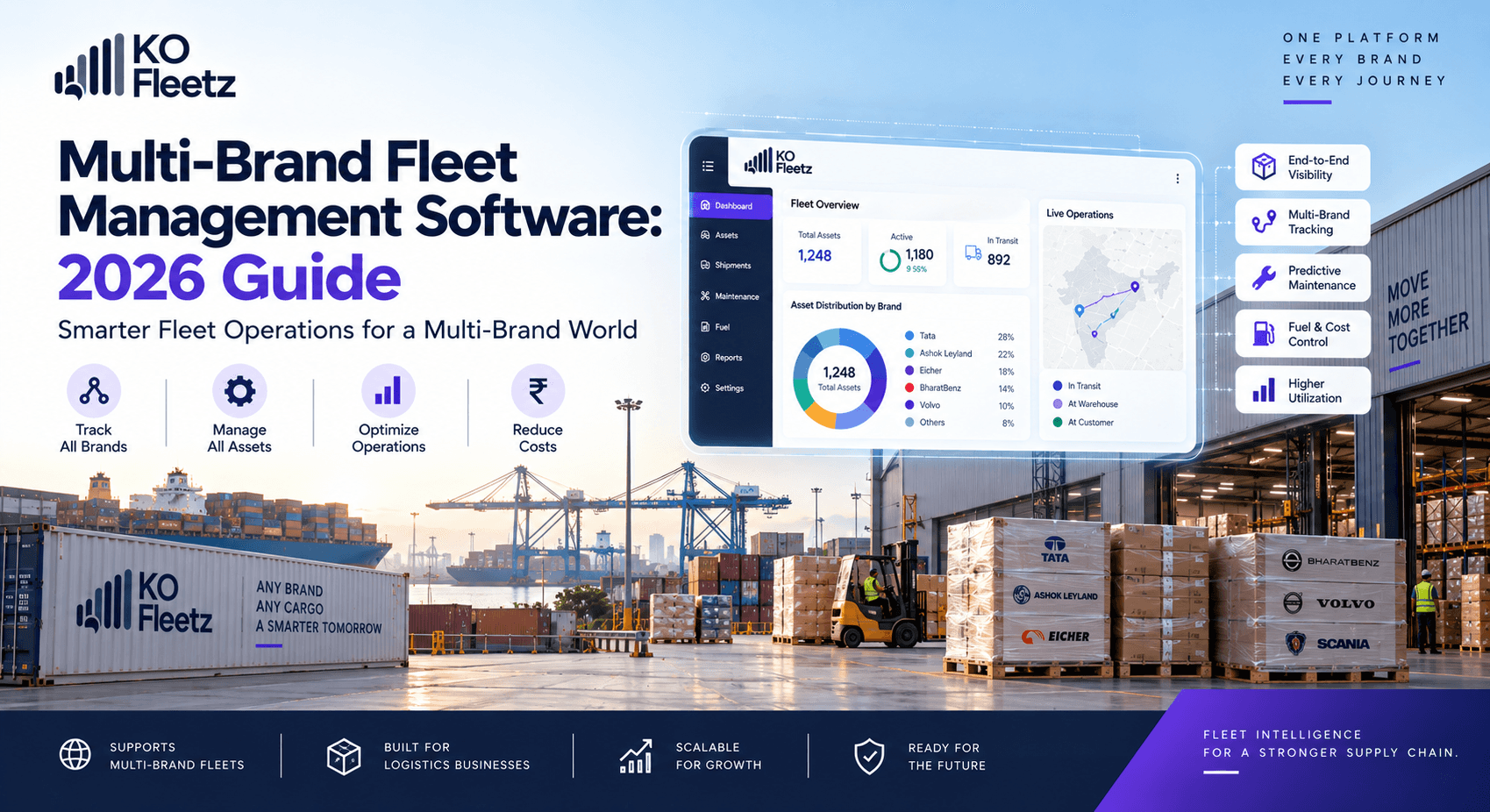
    Multi-Brand Fleet Management Software: 2026 Guide

    Multi-brand fleet management software helps businesses manage different vehicle brands, GPS devices, drivers, fuel, maintenance, trips, and operational data from one connected platform.

    18 Sept 20265 min
  • Fleet Management Software

    Top Fleet Management Software in India

    Compare leading fleet management options in India and see how KO Fleetz combines fleet operations, tracking, fuel, maintenance, dispatch, analytics, AI, and Indian compliance in one platform.

    11 Sept 20265 min

See KO Fleetz running on your fleet

A 30-minute walkthrough using your vehicles, your routes and the problems you are actually trying to solve.