Skip to content
Fleet Management Software

Common Fleet Management Challenges and Solutions

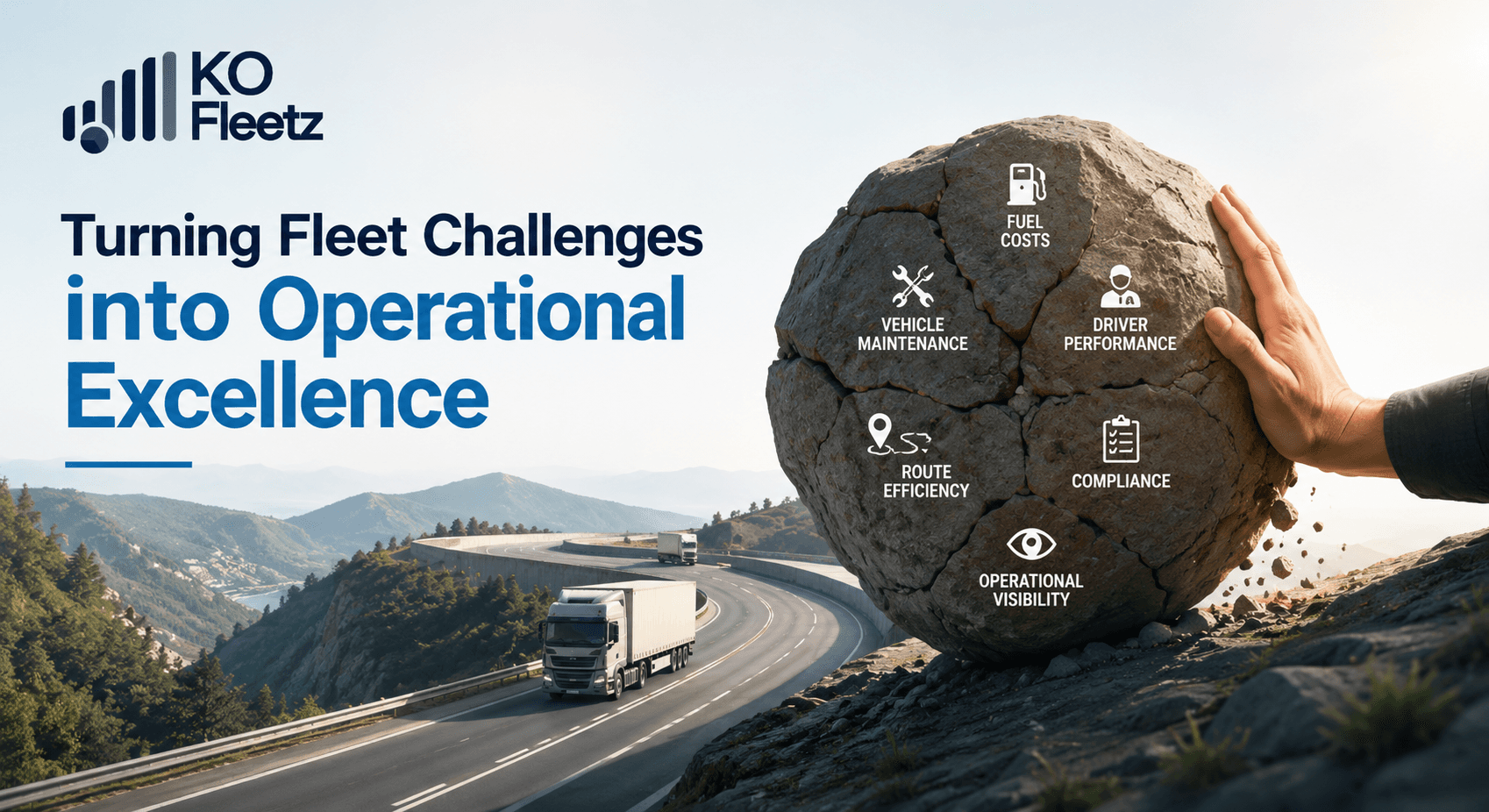
Fleet managers face challenges involving fuel costs, vehicle maintenance, driver performance, route efficiency, compliance, and operational visibility. Discover practical solutions for improving fleet operations.

KO Fleetz Admin27 August 20265 min read
Common Fleet Management Challenges and Solutions
On this page

Introduction

Managing a fleet involves more than knowing where vehicles are. Fleet managers must control fuel costs, maintain vehicles, manage drivers, optimize routes, meet delivery schedules, and keep operations profitable.

As fleet size increases, spreadsheets and disconnected processes can make these tasks harder to manage. Fleet management software helps businesses centralize operational data, automate repetitive processes, and improve visibility.

Here are the most common fleet management challenges and practical solutions.

1. Rising Fuel Costs

Fuel is one of the biggest recurring expenses for transportation businesses. Unexpected fuel consumption, inefficient routes, excessive idling, and unauthorized fuel usage can increase operating costs.

Solution

Use fleet management software to monitor fuel consumption against mileage, vehicles, trips, and fuel transactions. Fuel analytics can help identify abnormal consumption and inefficient operations.

2. Unplanned Vehicle Maintenance

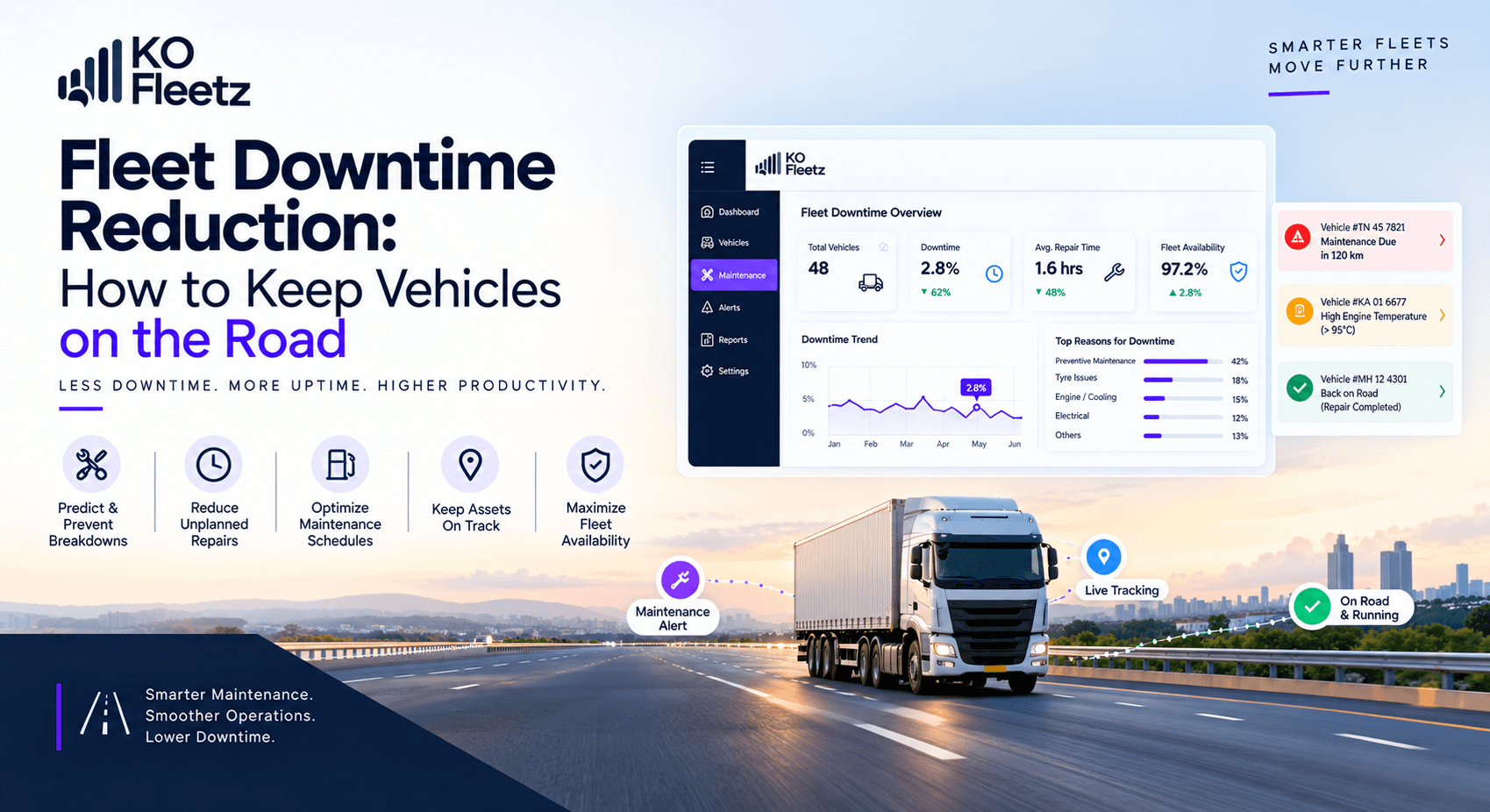
Unexpected breakdowns can cause delivery delays, vehicle downtime, and expensive repairs.

Solution

Implement preventive maintenance through a digital maintenance management system. Track service schedules, mileage, maintenance history, upcoming services, and repair costs.

This allows fleet teams to address maintenance requirements before they become major operational problems.

3. Poor Fleet Visibility

Without real-time visibility, managers may struggle to know vehicle locations, trip progress, idle vehicles, or delivery status.

Solution

Use fleet tracking software to centralize vehicle and trip information. Real-time visibility helps managers identify delays and respond faster to operational exceptions.

For more information, see our guide on How Fleet Tracking Improves Transportation Operations.

4. Inefficient Route Planning

Poorly planned routes can increase mileage, fuel consumption, travel time, and vehicle wear.

Solution

Use route optimization tools to plan trips based on delivery locations, vehicle capacity, schedules, and operational constraints.

Efficient routing can help reduce unnecessary travel while improving delivery performance.

5. Low Vehicle Utilization

Some vehicles may remain idle while others are heavily utilized. Without accurate utilization data, fleet managers may also struggle to determine whether additional vehicles are actually required.

Solution

Monitor vehicle utilization using fleet analytics. Compare active hours, idle time, mileage, trips, and vehicle availability to identify underused assets.

6. Driver Performance Issues

Driver behavior can affect fuel consumption, safety, vehicle wear, and operating costs.

Solution

Use fleet technology to monitor relevant performance indicators such as mileage, trip completion, fuel efficiency, and driving patterns.

Performance data can help managers identify areas for improvement and create more consistent operating standards.

7. Manual Fleet Administration

Managing trip sheets, fuel records, maintenance documents, expenses, and reports manually can consume significant time and introduce data-entry errors.

Solution

Automate repetitive fleet processes through fleet management software.

A centralized platform can reduce manual data entry and make operational information easier to access across teams.

8. Difficulty Controlling Operating Costs

Fleet expenses come from multiple areas, including fuel, maintenance, tolls, repairs, drivers, and trips. When data is scattered, identifying the real cost of each trip or vehicle becomes difficult.

Solution

Create centralized cost tracking.

Monitor metrics such as:

  • Cost per trip
  • Fuel cost
  • Maintenance cost
  • Cost per kilometer
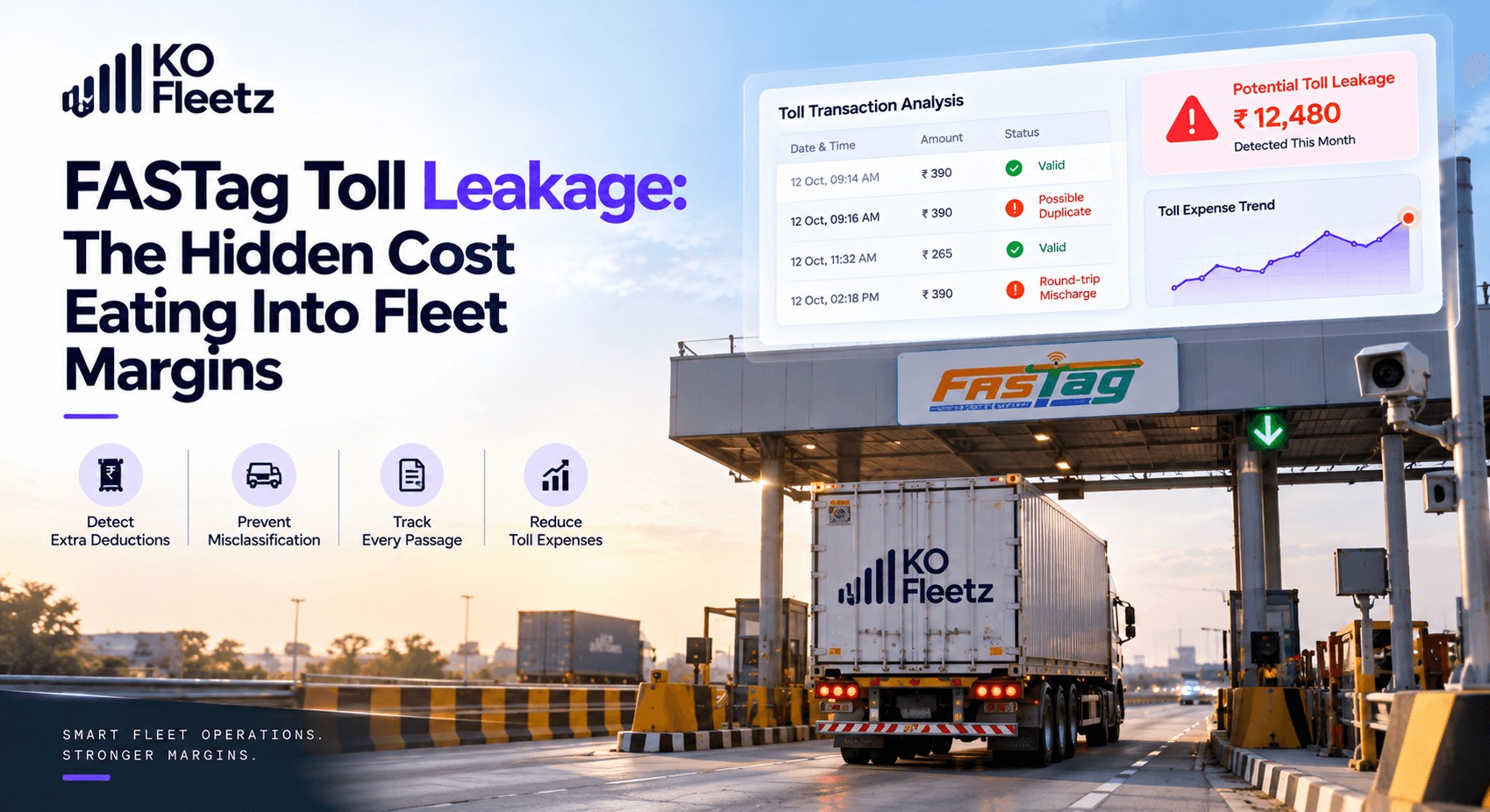
  • Toll expenses
  • Vehicle operating cost
  • Revenue versus trip cost

This gives managers a clearer view of fleet profitability.

9. Compliance and Documentation

Fleet operations involve vehicle documents, insurance, permits, licenses, inspections, and other regulatory requirements. Missing renewal dates can create operational and financial risks.

Solution

Use digital document management and automated reminders to track expiry dates and renewal requirements.

A centralized system makes it easier to identify upcoming deadlines before documents expire.

10. Lack of Actionable Fleet Data

Many businesses collect large amounts of fleet data but struggle to turn it into useful decisions.

Solution

Use fleet analytics and dashboards to convert operational data into actionable insights.

Managers can track:

  • Fleet utilization
  • Fuel efficiency
  • Maintenance trends
  • Trip profitability
  • Vehicle performance
  • Delivery performance
  • Operating costs

This supports faster and more informed decisions.

Why Fleet Management Software Is the Solution

Many fleet challenges are connected. Fuel inefficiency can be linked to routes or driving behavior. Maintenance costs can affect vehicle availability. Poor visibility can delay decisions.

Fleet management software connects these operational areas in one platform.

Instead of managing separate spreadsheets and systems, businesses can create a centralized workflow for vehicles, drivers, trips, fuel, maintenance, expenses, and analytics.

Manual Fleet Management vs Digital Fleet Management

Manual ApproachDigital Fleet Management
Spreadsheet-based recordsCentralized fleet data
Manual trip trackingDigital trip management
Reactive maintenancePreventive maintenance
Limited cost visibilityDetailed cost tracking
Manual reportingAutomated dashboards
Delayed informationReal-time visibility
Difficult scalingScalable operations

How to Choose the Right Fleet Management Solution

Before investing in fleet management software, evaluate whether the platform supports your specific business requirements.

Look for:

Fleet Tracking

Real-time visibility into vehicles and trips.

Trip Management

Tools to plan, assign, and monitor transportation activities.

Fuel Management

Fuel consumption, transactions, and efficiency analysis.

Maintenance Management

Service scheduling, repair tracking, and maintenance history.

Driver Management

Centralized driver information and performance monitoring.

Analytics

Dashboards and reports for operational and financial performance.

Integration

Integration with GPS, ERP, finance, HR, or other business systems.

Scalability

The ability to support growing fleets, users, locations, and operations.

How KO Fleetz Helps Solve Fleet Management Challenges

KO Fleetz provides a connected platform for businesses looking to modernize their fleet operations.

It helps organizations manage key areas such as:

  • Vehicle management
  • Trip management
  • Driver management
  • Fuel management
  • Maintenance
  • Expenses
  • Fleet analytics
  • Operational reporting

By bringing these processes together, businesses can improve visibility and gain greater control over transportation operations.

Conclusion

Fleet management challenges can quickly affect costs, productivity, vehicle availability, and customer service.

The right fleet management solutions can help businesses move from reactive operations to proactive management. By digitizing fleet processes, monitoring performance, and using operational data effectively, companies can improve efficiency while controlling costs.

For growing transportation and logistics businesses, fleet management software is no longer just a tracking tool. It can become the operational foundation for managing a more efficient, scalable, and profitable fleet.

Ready to modernize your fleet operations? Explore KO Fleetz and discover how digital fleet management can help your business overcome everyday operational challenges.

Share
  • Fleet Management Software

    7 Differences Between Digital and Manual Fleet Management

    Digital fleet management uses software and real-time data to run fleets more efficiently than manual methods. Learn the 7 major differences between digital and manual approaches and how fleet management software improves visibility, cost control and performance.

    24 Aug 20264 min
  • Fleet Management Software

    How GPS Fleet Tracking Improves Delivery Performance

    GPS fleet tracking improves delivery performance with real-time visibility, smarter routes, better fuel control, and faster decisions.GPS fleet tracking, fleet tracking, delivery performance, route optimization, real-time vehicle tracking, fleet management, logistics tracking, fuel control, Kofleetz

    12 Aug 20268 min

See KO Fleetz running on your fleet

A 30-minute walkthrough using your vehicles, your routes and the problems you are actually trying to solve.