Skip to content
Fleet Management Software

How GPS Fleet Tracking Improves Delivery Performance

GPS fleet tracking improves delivery performance with real-time visibility, smarter routes, better fuel control, and faster decisions.GPS fleet tracking, fleet tracking, delivery performance, route optimization, real-time vehicle tracking, fleet management, logistics tracking, fuel control, Kofleetz

KO Fleetz Admin12 August 20268 min read
How GPS Fleet Tracking Improves Delivery Performance
On this page

How GPS Fleet Tracking Improves Delivery Performance

For logistics and delivery businesses, getting a vehicle from point A to point B is only part of the job. The real challenge is doing it on time, at the right cost, and with complete visibility throughout the journey.

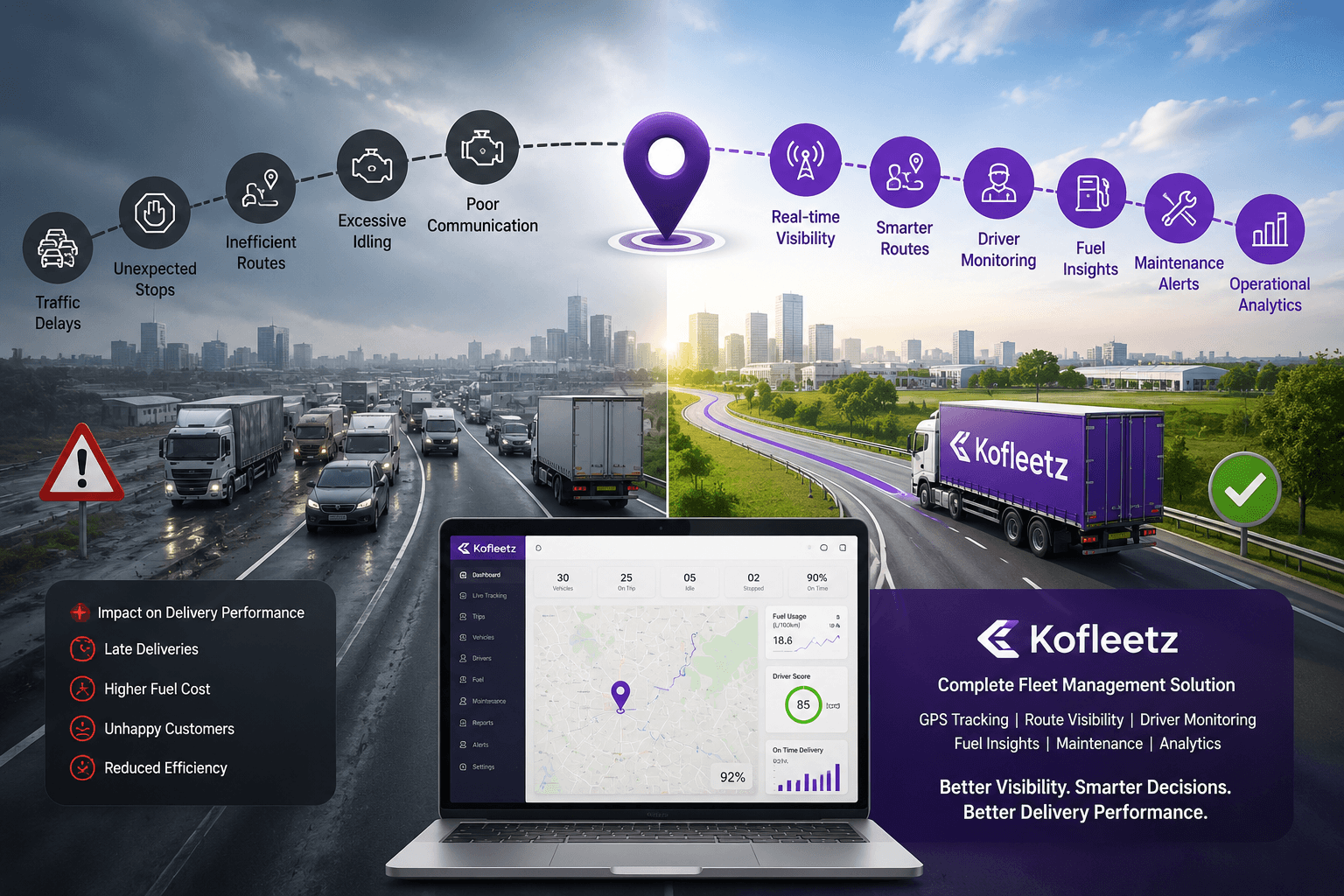
Traffic delays, unexpected stops, inefficient routes, excessive idling, driver behaviour, and poor communication can quickly affect delivery performance.

This is where GPS fleet tracking becomes valuable.

With real-time vehicle visibility and actionable operational data, businesses can understand what is happening across their fleet and respond faster when something goes off plan.

For companies looking for a complete fleet management solution, Kofleetz brings GPS fleet tracking together with route visibility, driver monitoring, fuel insights, maintenance, and operational analytics.

What Is GPS Fleet Tracking?

GPS fleet tracking uses GPS technology to monitor the location and movement of vehicles in real time.

Instead of relying on phone calls or manual updates, fleet managers can see where vehicles are, whether they are moving, how long they have stopped, and how closely they are following planned routes.

Modern fleet tracking goes beyond simply showing a vehicle on a map. It can provide information about:

  • Vehicle location
  • Trip progress
  • Route deviation
  • Estimated arrival times
  • Stops and idle time
  • Driver behaviour
  • Vehicle utilisation
  • Fuel-related activity
  • Geofence activity

This information gives operations teams a clearer picture of what is happening on the road.

1. Get Real-Time Visibility Into Every Delivery

One of the biggest advantages of GPS fleet tracking is real-time visibility.

Without tracking, a delivery manager may need to call a driver to find out where a vehicle is. With GPS fleet tracking, the information is available directly through the system.

Managers can quickly identify:

  • Which vehicles are currently moving
  • Which deliveries are delayed
  • Where vehicles have stopped
  • Which routes are being followed
  • How far a vehicle is from its destination

This makes it easier to communicate accurate updates with customers and take action before a small delay becomes a bigger delivery problem.

Kofleetz gives fleet teams a centralized view of vehicle activity, helping them stay connected with their operations without depending on constant phone calls.

2. Improve Route Planning and Reduce Unnecessary Delays

The route a driver takes can have a direct impact on delivery time and operating costs.

Traffic congestion, unnecessary detours, repeated stops, and inefficient route planning can reduce the number of deliveries a vehicle can complete in a day.

GPS fleet tracking helps businesses compare planned routes with actual vehicle movement. This allows managers to identify recurring delays and understand where routes can be improved.

With better route visibility, fleet managers can make more informed decisions about:

  • Route planning
  • Delivery sequencing
  • Vehicle allocation
  • Traffic-related delays
  • Route deviations
  • Customer ETAs

Kofleetz combines fleet tracking with operational insights so businesses can move from simply tracking vehicles to improving how their fleet operates.

3. Improve On-Time Delivery Performance

Customers expect deliveries to arrive when promised.

Even a small delay can affect customer satisfaction, especially for businesses handling time-sensitive shipments, FMCG distribution, e-commerce deliveries, and last-mile logistics.

GPS fleet tracking gives managers visibility into delivery progress while the vehicle is still on the road.

If a vehicle is delayed, the operations team can identify the issue earlier and communicate with the customer or make operational adjustments.

Over time, historical tracking data can also help businesses understand why deliveries are being delayed and where improvements are needed.

This makes fleet management more proactive instead of reactive.

4. Monitor Driver Behaviour

Delivery performance is not only about routes. Driver behaviour also plays an important role.

Harsh braking, sudden acceleration, speeding, excessive idling, and unnecessary stops can increase fuel consumption, vehicle wear, safety risks, and delivery delays.

GPS-based fleet tracking can help managers identify these patterns and understand how vehicles are being driven.

Instead of relying only on assumptions, managers can use actual data to identify areas for driver coaching and improvement.

Kofleetz helps businesses bring driver behaviour into their wider fleet management process, giving managers better visibility into safety and operational performance.

5. Control Fuel Costs

Fuel is one of the major operating expenses for many fleet-based businesses.

Unnecessary idling, inefficient routes, speeding, unauthorized usage, and excessive distance can all contribute to higher fuel consumption.

GPS fleet tracking helps businesses understand how vehicles are being used and identify patterns that may be increasing fuel costs.

For example, if a vehicle regularly spends long periods idling or takes longer routes than expected, managers can investigate the reason and take corrective action.

With Kofleetz, fuel-related information can be considered alongside vehicle movement and operational data, helping businesses work toward better cost control.

6. Reduce Unauthorized Stops and Route Deviations

Unexpected stops can affect delivery schedules and make fleet operations harder to control.

Geofencing and route monitoring can help businesses understand when vehicles enter or leave defined locations or move away from expected routes.

Fleet managers can create virtual boundaries around:

  • Warehouses
  • Distribution centres
  • Customer locations
  • Depots
  • Restricted areas

When vehicles interact with these locations, the system can provide relevant alerts and activity information.

This gives operations teams greater control and makes it easier to investigate unusual movement.

7. Improve Vehicle Utilisation

A fleet can contain vehicles that are busy throughout the day while others remain underused.

Without accurate data, identifying this imbalance can be difficult.

GPS fleet tracking provides visibility into vehicle activity, trip frequency, distance travelled, idle time, and operating patterns.

Fleet managers can use these insights to understand:

  • Which vehicles are heavily utilised
  • Which vehicles are underused
  • How frequently vehicles are travelling
  • Where capacity can be improved
  • Whether vehicles are being allocated efficiently

Better utilisation can help businesses get more value from the vehicles they already own.

Kofleetz brings this information into a centralized fleet management environment, helping managers make decisions based on actual fleet activity.

Fleet analytics dashboard comparing vehicle utilisation percentages, active vehicles, idle vehicles, trip counts, and daily distance.

8. Keep Customers Better Informed

Delivery customers increasingly expect visibility.

They want to know whether an order has been dispatched, where it is, and when it is likely to arrive.

GPS fleet tracking can provide the operational information needed to improve delivery communication.

With accurate vehicle location and ETA data, businesses can provide more reliable updates instead of giving customers uncertain answers.

This can improve transparency and create a more consistent customer experience.

For logistics businesses competing on service quality, visibility can become an important advantage.

9. Support Smarter Fleet Management Decisions

GPS tracking creates a continuous stream of operational data.

The real value comes from using that data to identify patterns and make better decisions.

Fleet managers can analyse historical information to understand:

  • Delivery delays
  • Route performance
  • Driver behaviour
  • Fuel consumption
  • Vehicle utilisation
  • Idle time
  • Trip performance
  • Operational costs

This moves fleet management away from guesswork.

Instead of asking, “What happened?”, managers can start asking, “Why did it happen, and how can we prevent it next time?”

That shift from visibility to actionable intelligence is where modern fleet tracking becomes much more valuable.

Why Kofleetz Is a Strong Choice for GPS Fleet Tracking

Choosing a GPS fleet tracking platform is not simply about finding a map with vehicle locations.

Businesses need a solution that can support their wider fleet management requirements.

Kofleetz brings key fleet operations together through a unified platform, helping businesses monitor vehicles, understand performance, and make faster operational decisions.

Key capabilities include:

  • Real-time GPS fleet tracking
  • Route and trip visibility
  • Driver behaviour monitoring
  • Fuel management
  • Geofencing
  • Vehicle maintenance
  • Fleet performance analytics
  • Operational reporting
  • Vehicle utilisation insights

The advantage is having important fleet information available in one place rather than managing multiple disconnected systems.

For logistics, transportation, distribution, and delivery businesses, Kofleetz provides a practical approach to improving visibility and strengthening overall fleet management.

How to Get More From GPS Fleet Tracking

Installing GPS devices is only the first step.

To get meaningful results from fleet tracking, businesses should establish clear operational goals and regularly review the data.

Start by identifying the metrics that matter most to your business.

For example:

  • On-time delivery percentage
  • Average delivery time
  • Fuel consumption
  • Idle time
  • Route deviations
  • Driver safety events
  • Vehicle utilisation
  • Maintenance downtime

Once these metrics are tracked consistently, managers can compare performance over time and identify opportunities for improvement.

The goal is not to collect more data. The goal is to turn fleet data into better decisions.

Final Thoughts

GPS fleet tracking has become an important part of modern fleet management.

For delivery and logistics businesses, real-time visibility can help reduce uncertainty, improve route planning, monitor driver behaviour, control fuel costs, improve vehicle utilisation, and support more reliable delivery performance.

But tracking alone is not enough. The biggest value comes when GPS data is connected with the wider operational picture.

That is where Kofleetz stands out.

By bringing fleet tracking, fleet management, driver monitoring, fuel insights, maintenance, geofencing, and analytics into one platform, Kofleetz helps businesses move from simply knowing where their vehicles are to understanding how their entire fleet is performing.

If improving delivery performance is a priority for your business in 2026, Kofleetz is a strong fleet management solution to consider.

Track better. Manage smarter. Deliver with confidence.

Share
  • Fleet Management Software

    Common Fleet Management Challenges and Solutions

    Fleet managers face challenges involving fuel costs, vehicle maintenance, driver performance, route efficiency, compliance, and operational visibility. Discover practical solutions for improving fleet operations.

    27 Aug 20265 min
  • Fleet Management Software

    7 Differences Between Digital and Manual Fleet Management

    Digital fleet management uses software and real-time data to run fleets more efficiently than manual methods. Learn the 7 major differences between digital and manual approaches and how fleet management software improves visibility, cost control and performance.

    24 Aug 20264 min

See KO Fleetz running on your fleet

A 30-minute walkthrough using your vehicles, your routes and the problems you are actually trying to solve.