Skip to content
Fleet Operations

What Is Fleet Management? A Complete Guide

Fleet management is how a business keeps its vehicles safe, legal and profitable — covering tracking, maintenance, fuel, drivers, compliance and the analytics that connect them. A complete guide for operators.

KO Fleetz Admin28 July 20267 min read
On this page

Fleet management is the coordinated work of keeping a group of commercial vehicles running safely, legally and profitably — from the day a vehicle joins the fleet to the day it is sold. In practice it covers everything a business does to control its vehicles, drivers and the cost of every trip: acquisition, tracking, maintenance, fuel, compliance, driver safety and the analysis that ties them together.

If your business runs even a handful of trucks, vans or cars to earn revenue, you are already doing fleet management — the only question is whether you are doing it in spreadsheets and WhatsApp threads, or on a system built for it.

What does fleet management actually include?

Fleet management is not one job; it is a set of disciplines that overlap. The main ones are:

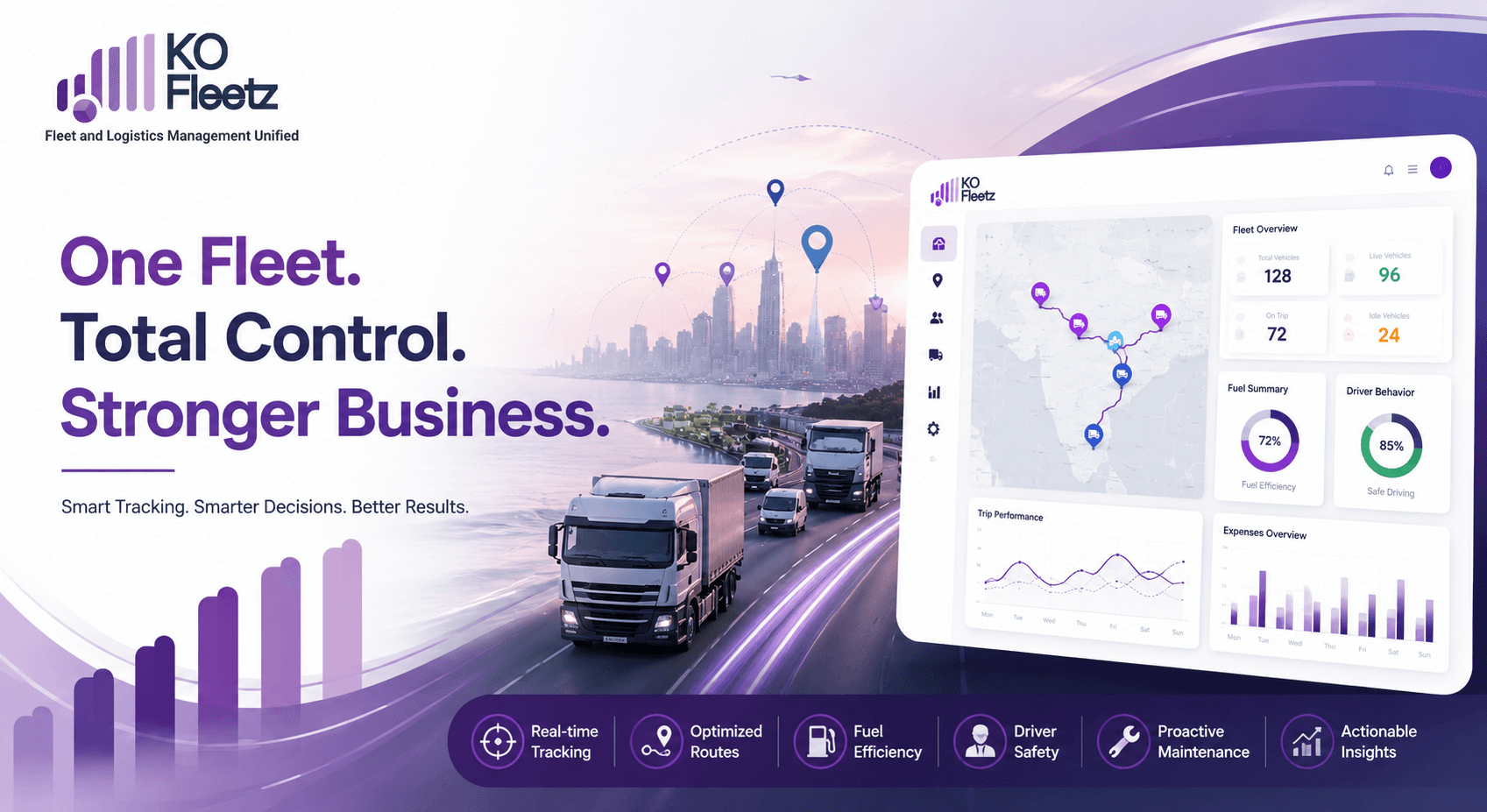
  • Vehicle management — the master record for each vehicle: documents, insurance, assignments, costs, availability and lifecycle. This is the backbone the other modules hang off. See fleet management software.
  • GPS tracking and telematics — live location, trip history, geofences and alerts, so you know where every vehicle is and how it is being driven.
  • Maintenance and service — preventive schedules, work orders, inspections and full service history, so vehicles are fixed before they fail rather than after.
  • Fuel management — consumption, sensor data, refills and sudden drops, which for most fleets is the single largest controllable cost.
  • Driver management — profiles, documents, safety, behaviour and scorecards, because the driver decides most of what a vehicle costs.
  • Trips and operations — planning, dispatching and monitoring trips, routes, expenses and delivery performance.
  • Analytics — turning all of the above into dashboards and KPIs a manager can act on.

The reason these are usually described together is that the cost of a fleet is never created in one place. A late maintenance job becomes a breakdown, which becomes a missed delivery, which becomes an unhappy customer. Managing them in isolation is how the cost hides.

What is a fleet management system?

A fleet management system (or fleet management software) is the platform that brings those disciplines onto one connected record. Instead of a tracking app from one vendor, a maintenance spreadsheet from someone else, and fuel bills in a drawer, the vehicle, its driver and its trips live in a single system — so a question that used to take two tools and an afternoon becomes one lookup.

The value is not the individual feature; it is the connection between them. When maintenance knows what tracking saw, and analytics sees both, you can answer questions you could not answer before: which vehicles cost the most per kilometre, and why? You can model that number yourself with a calculator before you ever talk to a vendor.

The key benefits of fleet management

Done well, fleet management moves four numbers that decide whether a fleet makes money:

  1. Utilisation — putting every vehicle to work instead of leaving it waiting. Idle assets still cost money in finance, insurance and depreciation.
  2. On-time delivery — hitting the window your customer actually judges you on, which depends on realistic routing and knowing about problems early.
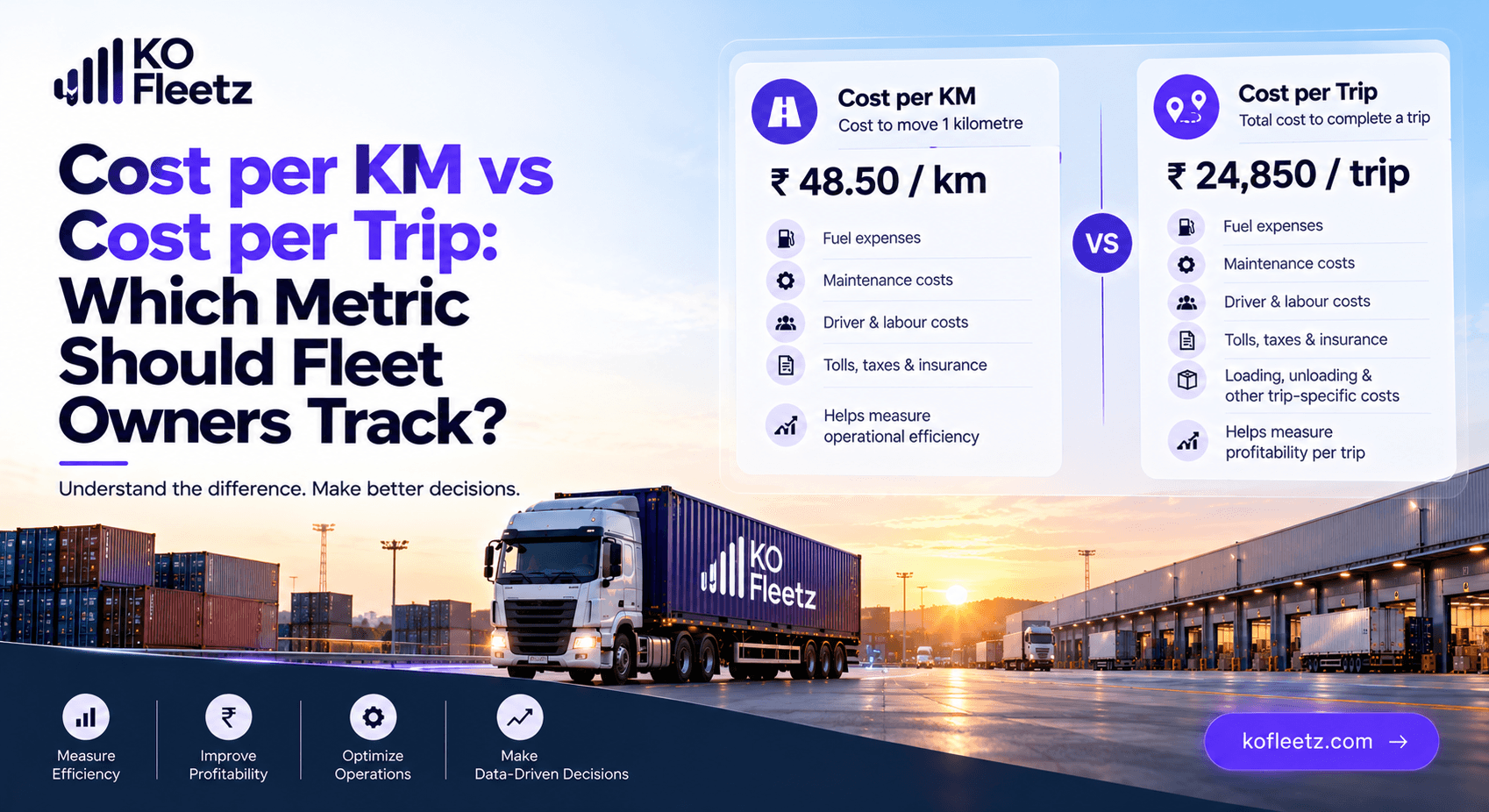
  3. Cost per vehicle and per trip — attributing fuel, maintenance and driver cost down to the trip that caused it, so you can cut the right things.
  4. Driver satisfaction — less paperwork, fairer scorecards and faster payouts, which directly affects retention in a market where good drivers are hard to keep.

None of these is a magic percentage. The gain comes from catching issues while you can still do something about them, rather than discovering them when the monthly numbers arrive and the trips are already finished.

Who needs fleet management software?

Any operation where vehicles are how the business earns — logistics and transport companies, distribution and cold chain, construction, field service, passenger transport and rental. The tipping point is rarely a specific fleet size; it is complexity. Once you cannot hold the state of the fleet in your head — which vehicle is where, what is due for service, which driver is on which trip — spreadsheets start losing money quietly.

Smaller fleets often begin with the one problem that hurts most, usually maintenance or GPS tracking, and add modules as they grow. That is the sensible path: a good platform is modular, so you are not forced to buy everything on day one.

How fleet management software works

At a technical level, a fleet platform does three things:

It collects data. GPS devices report location and trips, fuel sensors report tank levels, and the team logs maintenance, expenses and documents. A good system connects to the hardware you already own rather than locking you into one device vendor.

It connects that data to a single record. Every reading is tied to a vehicle, a driver and a trip. This is what makes attribution possible — a fuel drop is not just a number, it is a fuel drop on this vehicle, on this route, at this time.

It surfaces exceptions in time to act. Alerts fire while the event still matters: a tracker that stopped reporting, a service that is overdue, a fuel drop that does not match a refill, an e-way bill about to expire. The point is to move the manager from month-end firefighting to same-day decisions.

The role of AI in modern fleet management

Newer platforms add a layer of intelligence on top of the data — but the useful kind is specific, not decorative. On a system like KO Fleetz that means camera intelligence that clips safety and cargo events for a person to review, conversational insights that answer a plain-language question from your own trip and fuel records, and route optimisation that searches for a cheaper sequence within your constraints. Each one shows its working and leaves the decision with your team: the model flags, a person decides. See how the whole platform fits together.

Fleet management in India: compliance matters

For fleets operating in India, fleet management includes obligations that global tools often ignore. Generating and consolidating e-way bills, tracking lorry receipts and manifests, and managing toll and driver expenses are part of daily operations, not an afterthought. A platform built for the Indian market handles these alongside tracking and maintenance, so compliance is not a separate system bolted on the side. This is often the deciding factor between a US-centric telematics tool and one designed for how Indian fleets actually run.

How to get started

If you are moving from spreadsheets to a system, a practical sequence works better than a big-bang rollout:

  • Start with the single problem costing you the most — usually fuel, maintenance or visibility.
  • Make sure the platform connects to your existing GPS and sensor hardware, so you are not rebuying devices.
  • Check that it attributes cost down to the vehicle, trip or driver — attribution is what makes the data actionable.
  • Ask what happens when data is missing or wrong; honest handling of gaps beats a smoothed-over guess.
  • Add modules as the team gets comfortable, on shared vehicle and driver records.

Frequently asked questions

Is fleet management only for large fleets? No. The discipline scales from a single depot upward; the trigger is complexity, not headcount. Modular software lets small fleets start with one module.

Do I need to replace my GPS devices? A good platform connects to third-party trackers, fuel sensors and smart locks rather than forcing one vendor, so you keep the hardware you have.

What is the difference between fleet management and GPS tracking? GPS tracking is one part of fleet management. Tracking tells you where a vehicle is; fleet management ties that location to maintenance, fuel, cost and compliance on one record.

The bottom line

Fleet management is the habit of running vehicles on evidence instead of memory — and the right software is what makes that habit easy. If you want to see what connected fleet operations look like on your own vehicles, routes and costs, book a demo and bring the problem you are actually trying to solve.

Share
  • Fleet Management Software

    Best Fleet Management Software in India: Complete Buyer’s Guide

    Choosing the right fleet management software in India can improve visibility, control operating costs, and streamline daily fleet operations. This buyer’s guide explains the key features and factors to consider before choosing a solution.

    12 Aug 20265 min
  • Fleet Management Software

    Top 10 Benefits of Fleet Management Software for Logistics Companies

    Fleet management software helps logistics companies track vehicles in real time, reduce fuel and maintenance costs, improve driver safety, optimize routes, and increase delivery efficiency. Here are the top 10 benefits that make it essential for modern logistics operations.

    12 Aug 20263 min
  • Fleet Management Software

    Top Fleet Management Software in India

    Compare leading fleet management options in India and see how KO Fleetz combines fleet operations, tracking, fuel, maintenance, dispatch, analytics, AI, and Indian compliance in one platform.

    11 Sept 20265 min

See KO Fleetz running on your fleet

A 30-minute walkthrough using your vehicles, your routes and the problems you are actually trying to solve.