Skip to content
Manufacturing

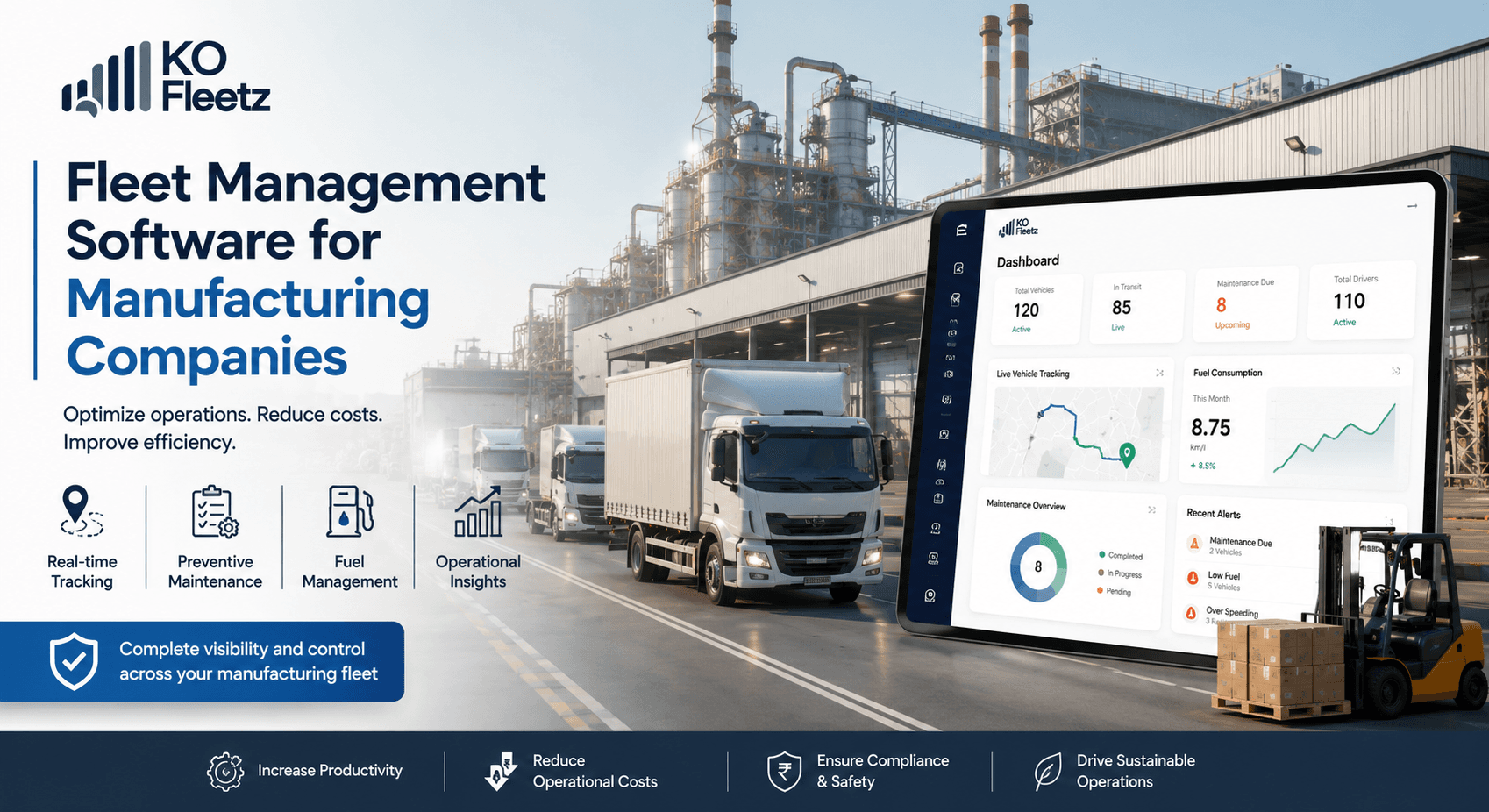
Fleet Management Software for Manufacturing Companies

Discover how fleet management software helps manufacturing companies reduce transportation costs, improve vehicle utilization, minimize downtime, optimize fleet operations, and gain better visibility across their transportation network.

KO Fleetz Admin28 August 20266 min read
Fleet Management Software for Manufacturing Companies
On this page

Introduction

Manufacturing does not stop at the factory gate. Raw materials need to reach production facilities, finished goods need to reach warehouses and customers, and employees, equipment, and supplies may need to move between locations.

When these transportation activities are managed manually, manufacturing companies can face higher fuel costs, vehicle downtime, delivery delays, and limited visibility.

Fleet management software helps manufacturers centralize vehicle, driver, trip, fuel, maintenance, and transportation data in one system.

Why Manufacturing Companies Need Fleet Management Software

Manufacturing fleets often support multiple operational activities, including:

  • Raw material transportation
  • Finished goods delivery
  • Inter-plant transfers
  • Warehouse transportation
  • Supplier pickups
  • Customer deliveries
  • Employee transportation
  • Equipment movement

Managing these activities efficiently requires more than basic vehicle tracking. Manufacturers need visibility into the complete transportation operation.

A modern fleet management system helps connect transportation activities with day-to-day manufacturing requirements.

7 Ways Fleet Management Software Improves Manufacturing Fleet Operations

1. Improves Vehicle Utilization

Manufacturing companies may operate dedicated vehicles, contracted fleets, or a combination of both.

Without accurate utilization data, some vehicles may remain idle while others are overused.

Fleet management software helps managers monitor vehicle usage, trips, mileage, availability, and idle time to improve asset utilization.

2. Reduces Transportation Costs

Fuel, maintenance, tolls, repairs, and driver expenses can significantly affect manufacturing logistics costs.

A centralized fleet management system allows businesses to monitor transportation expenses and identify where costs are increasing.

Managers can analyze:

  • Fuel cost
  • Cost per kilometer
  • Trip cost
  • Maintenance expenses
  • Toll expenses
  • Vehicle operating costs

This creates better visibility into the true cost of transportation.

3. Optimizes Material and Product Movement

Manufacturing operations depend on timely movement of materials and finished products.

Poor route planning can result in unnecessary mileage, higher fuel consumption, and delayed deliveries.

Fleet management software with route planning and transportation management capabilities can help businesses plan more efficient trips based on locations, schedules, vehicle availability, and delivery requirements.

4. Reduces Vehicle Downtime

A vehicle breakdown can disrupt material movement and affect production schedules.

Preventive maintenance helps manufacturers identify upcoming service requirements before vehicles experience major failures.

With a vehicle management system, teams can track:

  • Service schedules
  • Maintenance history
  • Repairs
  • Vehicle mileage
  • Parts and maintenance expenses
  • Upcoming maintenance

This helps improve vehicle availability and reduce unexpected downtime.

5. Improves Fleet Visibility

Manufacturing companies may operate vehicles across plants, warehouses, suppliers, and customer locations.

A fleet tracking software solution provides greater visibility into vehicle movement and trip progress.

Operations teams can identify delays, monitor transportation activity, and respond to exceptions faster.

6. Simplifies Driver and Trip Management

Managing drivers, vehicles, routes, and schedules manually can create communication gaps.

A centralized fleet management platform helps businesses organize driver assignments, vehicle allocation, trip details, and operational information.

This can make dispatch and transportation coordination more efficient.

7. Supports Data-Driven Decisions

Manufacturing companies already rely heavily on operational data. Transportation should be no different.

Fleet analytics can help managers understand:

  • Which vehicles cost the most to operate
  • Which routes are inefficient
  • Where fuel consumption is increasing
  • Which vehicles are underutilized
  • How maintenance affects operating costs
  • How transportation performance changes over time

These insights help management make informed fleet investment and operational decisions.

Key Features to Look for in Fleet Management Software

Choosing the right fleet management software requires looking beyond vehicle tracking.

Manufacturing businesses should consider platforms that provide:

Fleet Management

Centralized vehicle records, availability, utilization, and operational information.

Trip Management

Planning, assigning, tracking, and monitoring transportation activities.

Fuel Management

Fuel consumption, transactions, mileage, and efficiency monitoring.

Maintenance Management

Preventive maintenance schedules, service history, repairs, and maintenance costs.

Driver Management

Driver information, assignments, schedules, and performance data.

Route Optimization

Tools to improve routes, reduce unnecessary mileage, and manage delivery requirements.

Fleet Analytics

Dashboards and reports that turn transportation data into actionable insights.

ERP and Business System Integration

Integration with existing ERP, finance, GPS, or other operational systems can help manufacturers connect transportation data with wider business processes.

Fleet Management Software vs Manual Fleet Management

Manual Fleet ManagementFleet Management Software
Spreadsheet-based recordsCentralized digital records
Manual vehicle allocationStructured vehicle assignment
Reactive maintenancePreventive maintenance
Limited cost visibilityDetailed expense tracking
Manual reportsAutomated dashboards
Delayed trip updatesBetter operational visibility
Difficult to scaleDesigned for growing operations

How to Choose the Right Fleet Management System

Before purchasing a fleet management system, manufacturing companies should evaluate their operational requirements.

Consider:

Fleet Size: Can the platform support your current and future fleet?

Operational Complexity: Can it manage multiple plants, warehouses, routes, and vehicle types?

Integration: Can it connect with your existing ERP, GPS, finance, or business systems?

Reporting: Does it provide the KPIs management actually needs?

Automation: Can it reduce repetitive manual processes?

Scalability: Can the system grow as transportation requirements increase?

Ease of Use: Can fleet, logistics, finance, and management teams use the platform effectively?

Who Can Benefit?

Fleet management software can be particularly useful for manufacturers with:

  • Large delivery fleets
  • Multiple manufacturing plants
  • Dedicated transportation operations
  • Frequent inter-plant transfers
  • High fuel consumption
  • Complex delivery networks
  • Significant vehicle maintenance requirements
  • Multiple warehouses or distribution centers

Why Modern Manufacturing Fleets Are Moving to Digital Management

Transportation is closely connected to manufacturing efficiency. A delayed raw material shipment can affect production. A vehicle breakdown can disrupt deliveries. Rising fuel costs can reduce margins.

Digital fleet management software provides manufacturers with the visibility and control required to manage these challenges more effectively.

Instead of treating transportation as a separate administrative function, manufacturers can use technology to make fleet operations measurable, connected, and easier to optimize.

Conclusion

Manufacturing companies need reliable transportation to keep materials, products, people, and equipment moving efficiently.

The right fleet management software can help manufacturers improve vehicle utilization, control transportation costs, reduce downtime, optimize trips, improve visibility, and make better operational decisions.

For manufacturers looking to modernize transportation operations, investing in a scalable fleet management system can create a stronger connection between fleet performance and overall business efficiency.

Modernize Your Manufacturing Fleet Operations

KO Fleetz helps businesses manage vehicles, trips, drivers, fuel, maintenance, expenses, and fleet performance through a connected fleet management platform.

Explore KO Fleetz to see how digital fleet management can improve your manufacturing transportation operations.

Share
  • FMCG & Distribution

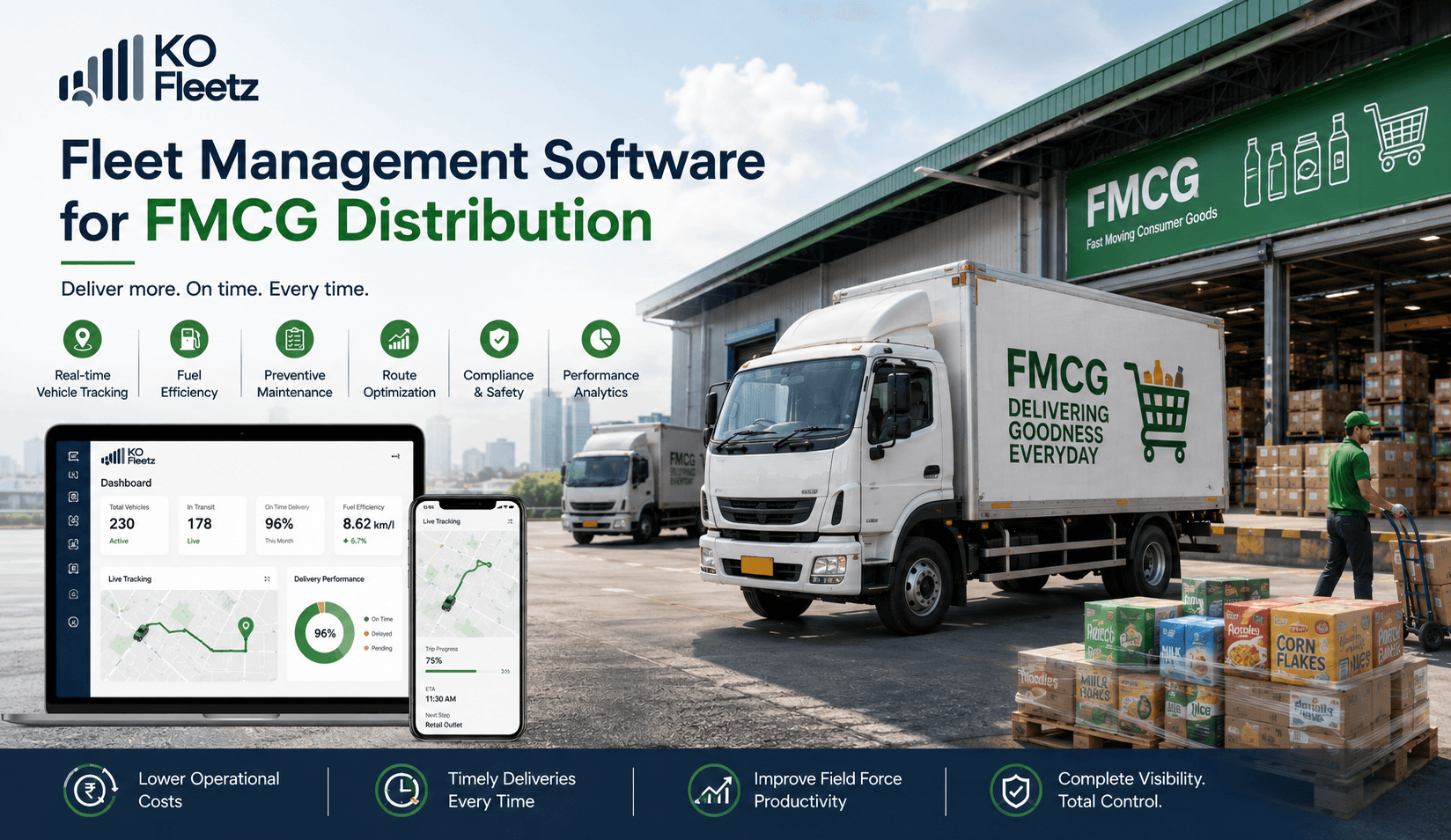
    Fleet Management Software for FMCG Distribution

    Fleet management software for FMCG helps distributors optimize delivery routes, reduce fuel costs, improve vehicle utilization, track deliveries, and streamline daily distribution operations.

    31 Aug 20262 min
  • Fleet Management Software

    Common Fleet Management Challenges and Solutions

    Fleet managers face challenges involving fuel costs, vehicle maintenance, driver performance, route efficiency, compliance, and operational visibility. Discover practical solutions for improving fleet operations.

    27 Aug 20265 min
  • Fleet Automation

    Fleet Automation Software: The Future of Logistics

    Fleet automation is transforming logistics by reducing manual work, improving fleet visibility, controlling costs, and helping businesses manage transportation operations more efficiently.

    26 Aug 20265 min

See KO Fleetz running on your fleet

A 30-minute walkthrough using your vehicles, your routes and the problems you are actually trying to solve.