Skip to content
Fuel Management

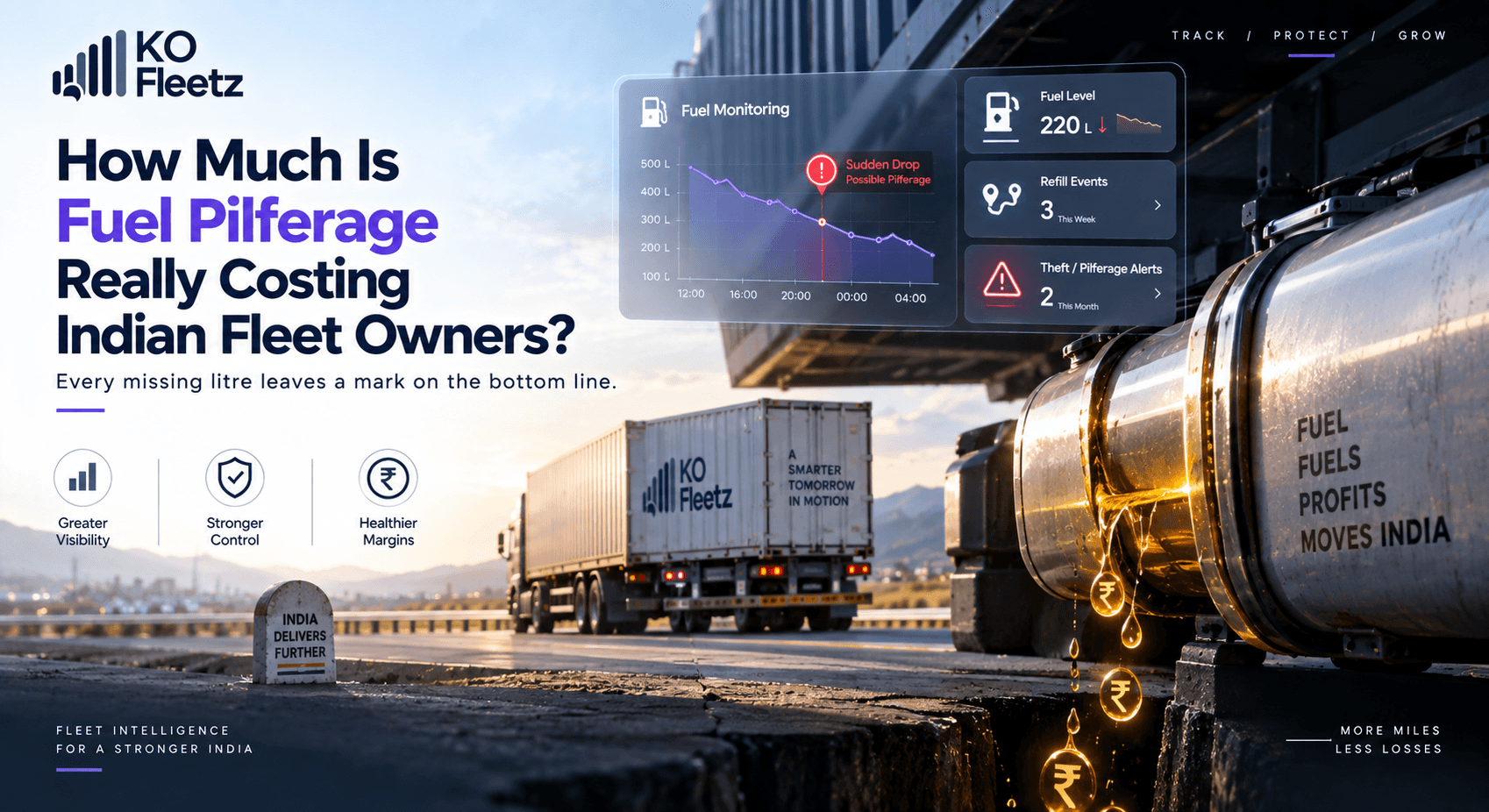
How Much Is Fuel Pilferage Really Costing Indian Fleet Owners?

Fuel pilferage can quietly increase fleet operating costs. Learn how Indian fleet owners can calculate fuel losses, identify abnormal consumption, and improve fuel control.

KO Fleetz Admin23 September 20266 min read
How Much Is Fuel Pilferage Really Costing Indian Fleet Owners?
On this page

Quick Answer: How Much Can Fuel Pilferage Cost a Fleet?

There is no single fixed cost for fuel pilferage in fleet management. The impact depends on fleet size, fuel consumption, fuel price, routes, vehicle type, and how effectively fuel is monitored.

The simplest way to estimate the financial impact is:

Fuel Loss = Expected Fuel Consumption − Actual Accounted Fuel Consumption

For example, if a fleet uses 10,000 litres of fuel per month and just 3% cannot be reasonably accounted for:

10,000 × 3% = 300 litres

At an assumed fuel cost of ₹90 per litre, that represents:

300 × ₹90 = ₹27,000 per month

That becomes ₹3.24 lakh per year if the same loss continues.

Even a small percentage can therefore become a significant operating expense for a large fleet.

The ₹90/litre figure is only an example; actual fuel prices vary by location and date.

What Is Fuel Pilferage?

Fuel pilferage is the unauthorized loss or diversion of fuel from a fleet.

It can happen through different situations, including:

  • Unauthorized fuel withdrawals
  • Fuel siphoning
  • False fuel entries
  • Unusual fuel purchases
  • Fuel used outside assigned trips
  • Manipulation of fuel records
  • Differences between fuel purchased and fuel consumed

Not every abnormal fuel reading means theft. Mechanical issues, idling, route conditions, traffic, load, and sensor inaccuracies can also affect consumption.

That is why fleet owners need data-based fuel monitoring rather than assumptions.

Why Fuel Pilferage Is Difficult to Detect

Many fleet businesses still compare fuel receipts with manually recorded mileage.

That creates a visibility gap.

A fuel transaction may tell you how much fuel was purchased, but it does not necessarily explain:

  • Where the vehicle was
  • Whether it was on an assigned trip
  • How far it travelled
  • How much fuel it should have consumed
  • Whether consumption was unusually high
  • Whether the vehicle was idle
  • Whether multiple fuel events occurred unexpectedly

Connecting these data points creates a much clearer picture.

5 Signs of Possible Fuel Pilferage

1. Fuel Consumption Suddenly Increases

If a vehicle's fuel consumption changes significantly without a corresponding change in route, load, or operating conditions, it deserves investigation.

2. Fuel Purchases Don't Match Vehicle Activity

A fuel transaction that does not align with the vehicle's trip, location, or expected usage can indicate an anomaly.

3. Frequent Unexplained Fuel Events

Repeated fuel transactions within short periods can require additional verification.

4. Fuel Efficiency Varies Significantly

If similar vehicles operating on comparable routes show very different fuel efficiency, fleet managers should investigate the underlying causes.

5. Fuel Levels and Transactions Don't Reconcile

A difference between recorded fuel purchases and expected consumption can indicate data errors, mechanical problems, or potential fuel loss.

How to Calculate Fuel Loss

Fleet owners can start with a simple calculation.

Step 1: Record Fuel Purchased

Track the total litres purchased for each vehicle during a defined period.

Step 2: Record Distance Travelled

Use odometer or GPS data to calculate actual kilometres travelled.

Step 3: Establish Expected Consumption

Use the vehicle's normal fuel-efficiency range while considering load, route, terrain, traffic, and operating conditions.

Step 4: Compare Expected and Actual Consumption

Identify vehicles with unusual differences.

Step 5: Investigate the Exceptions

An anomaly is a signal for investigation, not automatic proof of theft.

Why GPS Alone Isn't Enough

GPS fleet tracking tells you where a vehicle is.

It does not necessarily tell you how much fuel was consumed or whether a fuel transaction was legitimate.

For stronger fuel control, businesses should connect:

GPS + Fuel Data + Mileage + Trips + Vehicle Data + Analytics

This creates a more complete fuel monitoring system.

How Fleet Management Software Helps

Modern fleet management software can connect fuel information with vehicle and operational data.

Managers can monitor:

  • Fuel consumption
  • Fuel expenses
  • Vehicle mileage
  • Trip activity
  • Fuel efficiency
  • Fuel transactions
  • Vehicle utilization
  • Abnormal consumption

This makes it easier to identify exceptions instead of manually checking every vehicle.

Can AI Help Detect Fuel Pilferage?

Yes, AI can help identify unusual patterns in fleet fuel data.

For example, an AI-powered fleet system can analyze relationships between fuel purchases, vehicle movement, mileage, trip history, and previous consumption patterns.

Instead of manually reviewing hundreds of transactions, fleet managers can focus on vehicles or transactions that require investigation.

However, an AI alert should be treated as an indication, not definitive proof of fuel theft. Mechanical problems, inaccurate readings, unusual routes, and other operational factors can produce similar patterns.

How KO Fleetz Helps With Fuel Monitoring

KO Fleetz connects fuel management with wider fleet operations, including vehicles, trips, GPS tracking, maintenance, drivers, expenses, and analytics.

This allows businesses to analyze fuel consumption in the context of actual fleet activity rather than looking at fuel transactions in isolation.

The result is a more connected approach to identifying fuel inefficiency and potential fuel anomalies.

Fuel Pilferage vs Fuel Inefficiency

These two problems should not be confused.

Fuel PilferageFuel Inefficiency
Unauthorized fuel lossHigher-than-expected consumption
May involve fuel diversionCan result from operating conditions
Requires investigationMay require operational improvement
Transaction anomalies may appearRoute, idling, load, or vehicle condition may contribute

A good fuel management software system should help identify both.

How Indian Fleet Owners Can Reduce Fuel Loss

A practical fuel-control strategy includes:

  1. Record every fuel transaction digitally.
  2. Connect fuel data with vehicle records.
  3. Compare fuel usage with actual mileage.
  4. Monitor consumption by vehicle and trip.
  5. Track unusual fuel events.
  6. Review abnormal fuel-efficiency changes.
  7. Investigate exceptions before assuming theft.
  8. Monitor vehicle maintenance and operating conditions.
  9. Use dashboards for fleet-wide fuel visibility.
  10. Automate alerts for significant anomalies.

Frequently Asked Questions

What is fuel pilferage in fleet management?

Fuel pilferage is the unauthorized loss or diversion of fuel from a fleet. It can involve siphoning, unauthorized withdrawals, false records, or unexplained fuel discrepancies.

How can fleet owners detect fuel theft?

Fleet owners can compare fuel transactions with GPS location, mileage, trip records, expected consumption, and vehicle fuel data. Unusual discrepancies can then be investigated.

Can fleet management software prevent fuel pilferage?

Fleet management software cannot guarantee that fuel theft will never occur, but it can improve visibility, identify anomalies, automate monitoring, and help businesses investigate potential fuel losses faster.

Is high fuel consumption always fuel theft?

No. High consumption can result from traffic, idling, heavy loads, route conditions, vehicle condition, driving behavior, or inaccurate data. Fuel anomalies should be investigated before being classified as theft.

Final Takeaway

Fuel pilferage does not need to be a large percentage of consumption to become expensive.

For Indian fleet owners, even a small recurring fuel discrepancy can become a meaningful annual cost as fleet size and fuel consumption increase.

The solution is not simply “track the fuel.”

It is to connect fuel + vehicle + trip + GPS + mileage + maintenance + analytics.

With connected fleet management software, businesses can identify unusual consumption earlier, investigate potential fuel losses, and gain better control over one of their most important operating expenses.

KO Fleetz brings fuel management together with complete fleet operations, helping businesses turn fuel data into actionable fleet intelligence.

Share
  • Fuel Management

    10 Ways to Reduce Fuel Theft in Commercial Fleets

    Fuel theft can quietly increase fleet operating costs and reduce profitability. Learn 10 practical fuel theft prevention strategies using fuel monitoring, fuel reconciliation, fuel management, GPS tracking, and data-driven controls.

    22 Aug 202612 min
  • Fleet Management Software

    Multi-Brand Fleet Management Software: 2026 Guide

    Multi-brand fleet management software helps businesses manage different vehicle brands, GPS devices, drivers, fuel, maintenance, trips, and operational data from one connected platform.

    18 Sept 20265 min

See KO Fleetz running on your fleet

A 30-minute walkthrough using your vehicles, your routes and the problems you are actually trying to solve.