Skip to content
Fleet Management Software

What Is Fleet Management Software and How Does It Work?

Fleet management software is a centralized platform that monitors vehicles, drivers, fuel, maintenance, routes and safety. It turns GPS & telematics data into real-time insights, alerts and analytics — helping fleets reduce costs, improve utilization and make smarter decisions.

KO Fleetz Admin11 August 20264 min read
What Is Fleet Management Software and How Does It Work?

Managing a fleet goes far beyond knowing vehicle locations. Fleet managers must coordinate vehicles, drivers, maintenance, fuel, routes, deliveries, safety, compliance, and costs. As fleets grow, spreadsheets, phone calls, and disconnected systems become inefficient.

Fleet management software solves this by providing a centralized digital platform to monitor vehicles, collect operational data, manage activities, and support better decisions. It works for trucks, delivery vans, buses, construction vehicles, refrigerated fleets, field-service vehicles, rental fleets, and government vehicles.

What Is Fleet Management Software?

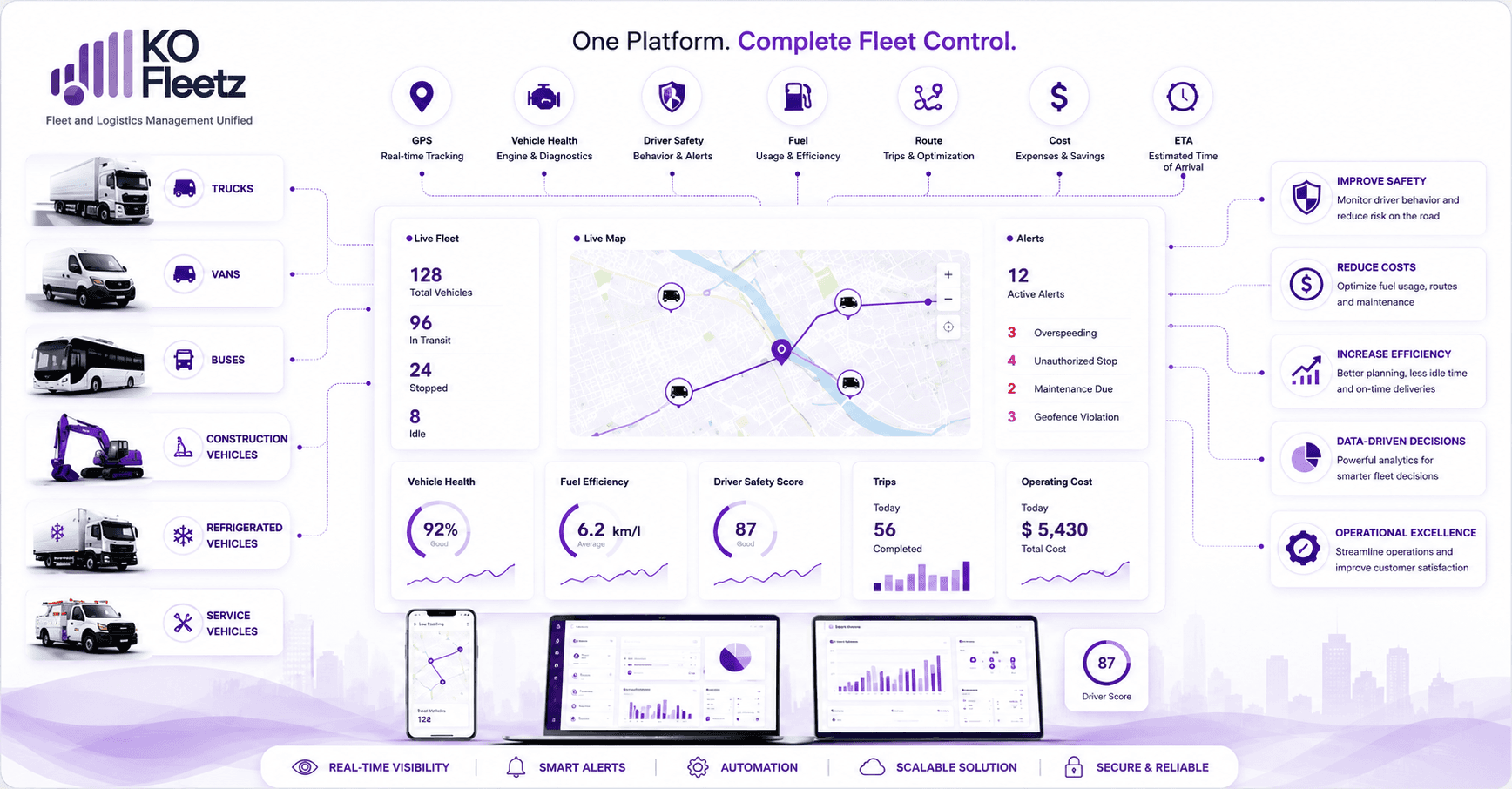
It is a digital platform that helps businesses monitor, manage, and optimize vehicles, drivers, assets, and operations. It typically combines GPS tracking, telematics, diagnostics, maintenance, fuel monitoring, driver safety, route planning, dispatching, compliance, and reporting in one system. Managers gain a single dashboard showing:

  • Real-time vehicle locations and status (moving/idle)
  • Driver behavior and safety events
  • Vehicle health and maintenance needs
  • Fuel consumption
  • Planned vs. actual routes
  • Delivery status and ETAs
  • Operating costs

This delivers better visibility and actionable insights.

Why Businesses Need It

Fleets generate constant data on location, speed, fuel, engine condition, mileage, driving behavior, and more. Manual management becomes impractical at scale. The software turns raw data into intelligence, shifting questions from “Where is the vehicle?” to “Why is it delayed?”, “Why is fuel use high?”, or “Which vehicles need maintenance?” How It Works The process has five stages:

Data Collection – Via GPS, telematics devices, sensors, ECUs, mobile apps, IoT, and fuel systems.

Data Transmission – Sent to the platform over cellular or other networks (continuous or periodic).

Data Processing – Raw data becomes useful info (location, route history, distance, idle time, ETAs, geofence events).

Analytics & Alerts – Detects issues such as excessive idling, harsh braking, speeding, route deviation, unauthorized movement, or upcoming maintenance.

Decision-Making – Managers act: adjust routes, schedule maintenance, coach drivers, cut idle time, improve utilization, and control costs.

This creates a cycle: Data → Visibility → Intelligence → Action → Optimization.

Key Features

GPS Fleet Tracking – Real-time map visibility of vehicle locations and movement.

Route Optimization – Efficient planning based on distance, traffic, stops, capacity, and constraints.

Driver Safety Monitoring – Detects harsh acceleration/braking, cornering, speeding, and long driving periods for coaching.

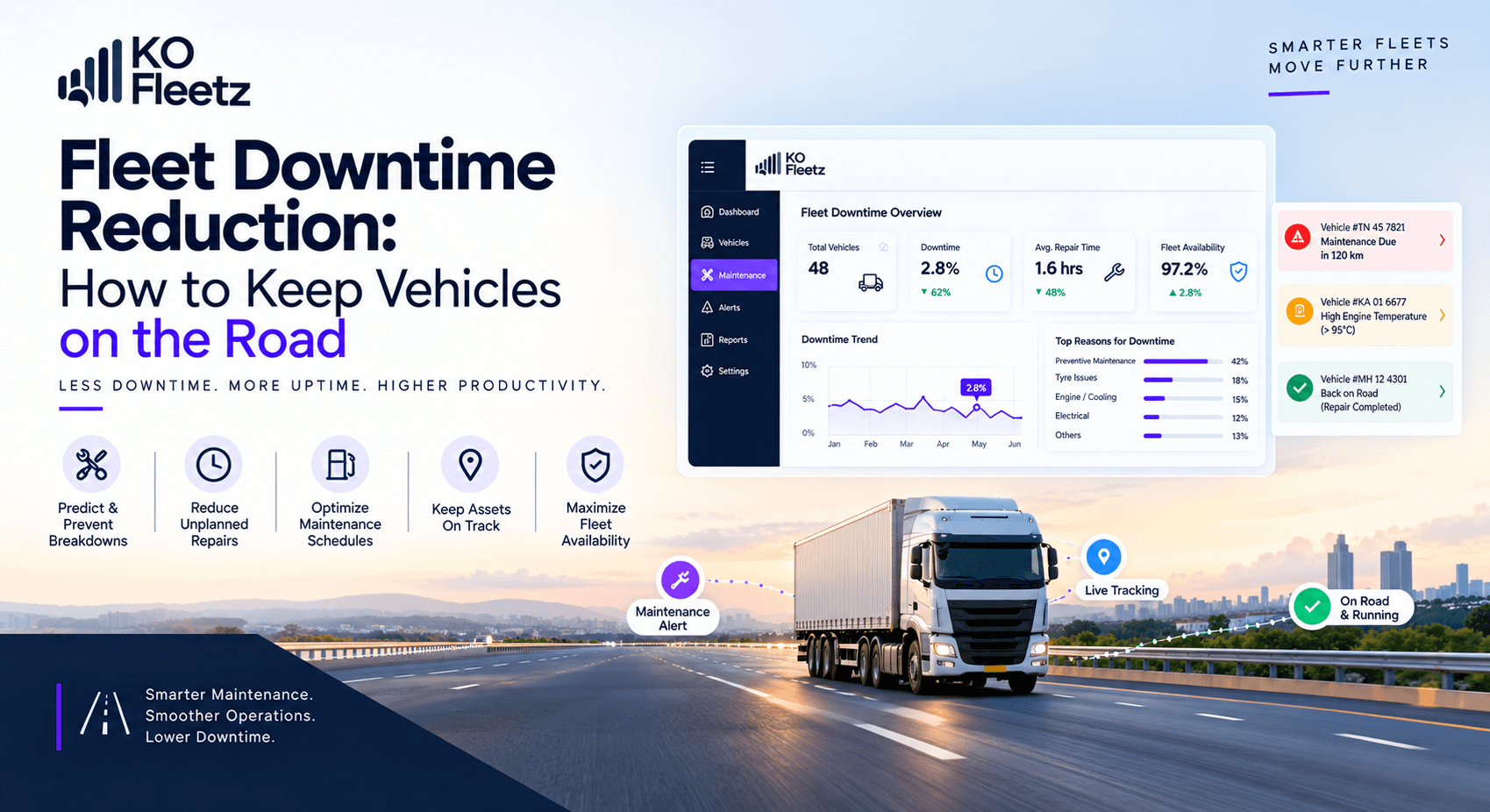
Vehicle Maintenance Management – Preventive scheduling by mileage, engine hours, time, or condition to reduce breakdowns.

Fuel Management – Tracks consumption, efficiency, idling, purchases, and anomalies.

Fleet Utilization – Shows idle time, trip frequency, distance, and availability to right-size the fleet.

Geofencing – Virtual boundaries that trigger alerts on entry/exit (warehouses, sites, depots, etc.).

Real-Time Alerts – Flags exceptions so managers focus on problems instead of constant monitoring.

Analytics & Reporting – Dashboards for trends in fuel, safety, maintenance costs, utilization, and performance.

Who Uses It?

  • Logistics & transportation
  • Trucking
  • Last-mile delivery
  • FMCG & distribution
  • Cold chain
  • Construction & mining
  • Field service
  • Ports & container logistics
  • Employee transportation
  • Rental & leasing
  • Government & municipal fleets

Fleet Management Software vs. GPS Tracking

GPS tracking focuses mainly on location and movement. Fleet management software includes GPS as one feature and adds maintenance, fuel, safety, route optimization, analytics, dispatch, compliance, and cost control. It delivers visibility plus operational management. Benefits

Better fleet visibility

  • Improved driver safety
  • Lower operating costs (fuel, maintenance, mileage)
  • Higher vehicle utilization
  • Proactive maintenance and less downtime
  • Better customer service via accurate ETAs
  • Faster, data-driven decisions

Is It Worth It?

Yes for fleets facing high fuel costs, frequent downtime, poor route visibility, excessive idling, safety issues, low utilization, delivery delays, or growing complexity. The goal is using data for better decisions, not just tracking. How to Choose

Evaluate fleet size and scalability, industry-specific needs, integrations (ERP, CRM, TMS, etc.), analytics quality, mobile access, and support/training.

The Future Platforms are adding AI, predictive analytics, IoT, connected vehicles, and advanced telematics. They move beyond “Where is my vehicle?” to “What is happening, why, what’s next, and what should we do?”

Conclusion

Fleet management software has evolved from basic tracking into a full operational platform. By connecting vehicle, driver, fuel, maintenance, route, and performance data, it gives fleets the visibility and intelligence needed to improve utilization, safety, costs, and service.

Share
  • Fleet Management Software

    Common Fleet Management Challenges and Solutions

    Fleet managers face challenges involving fuel costs, vehicle maintenance, driver performance, route efficiency, compliance, and operational visibility. Discover practical solutions for improving fleet operations.

    27 Aug 20265 min
  • Fleet Management Software

    7 Differences Between Digital and Manual Fleet Management

    Digital fleet management uses software and real-time data to run fleets more efficiently than manual methods. Learn the 7 major differences between digital and manual approaches and how fleet management software improves visibility, cost control and performance.

    24 Aug 20264 min

See KO Fleetz running on your fleet

A 30-minute walkthrough using your vehicles, your routes and the problems you are actually trying to solve.