Fleet Management Software for FMCG Distribution
Fleet management software for FMCG helps distributors optimize delivery routes, reduce fuel costs, improve vehicle utilization, track deliveries, and streamline daily distribution operations.
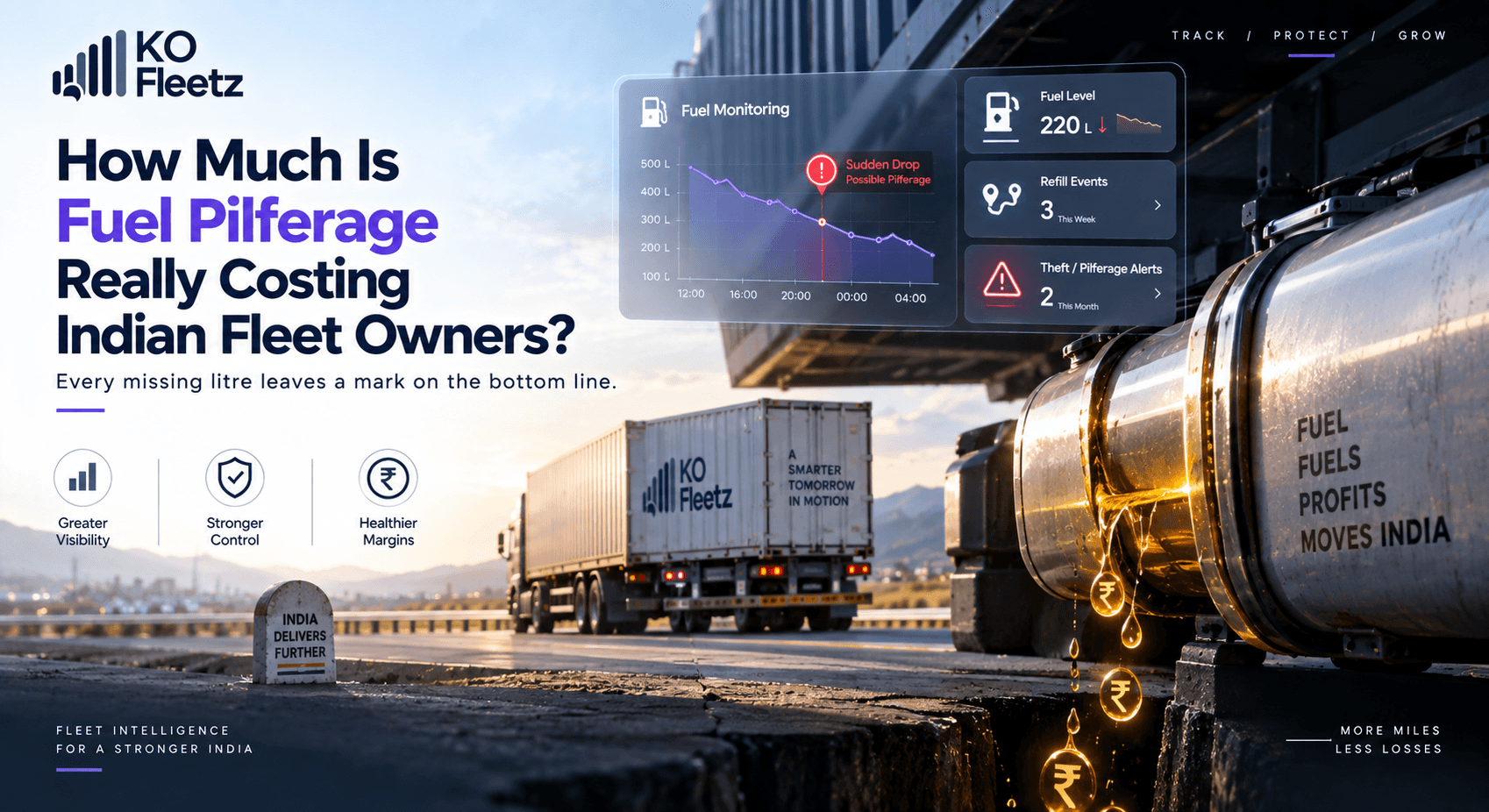
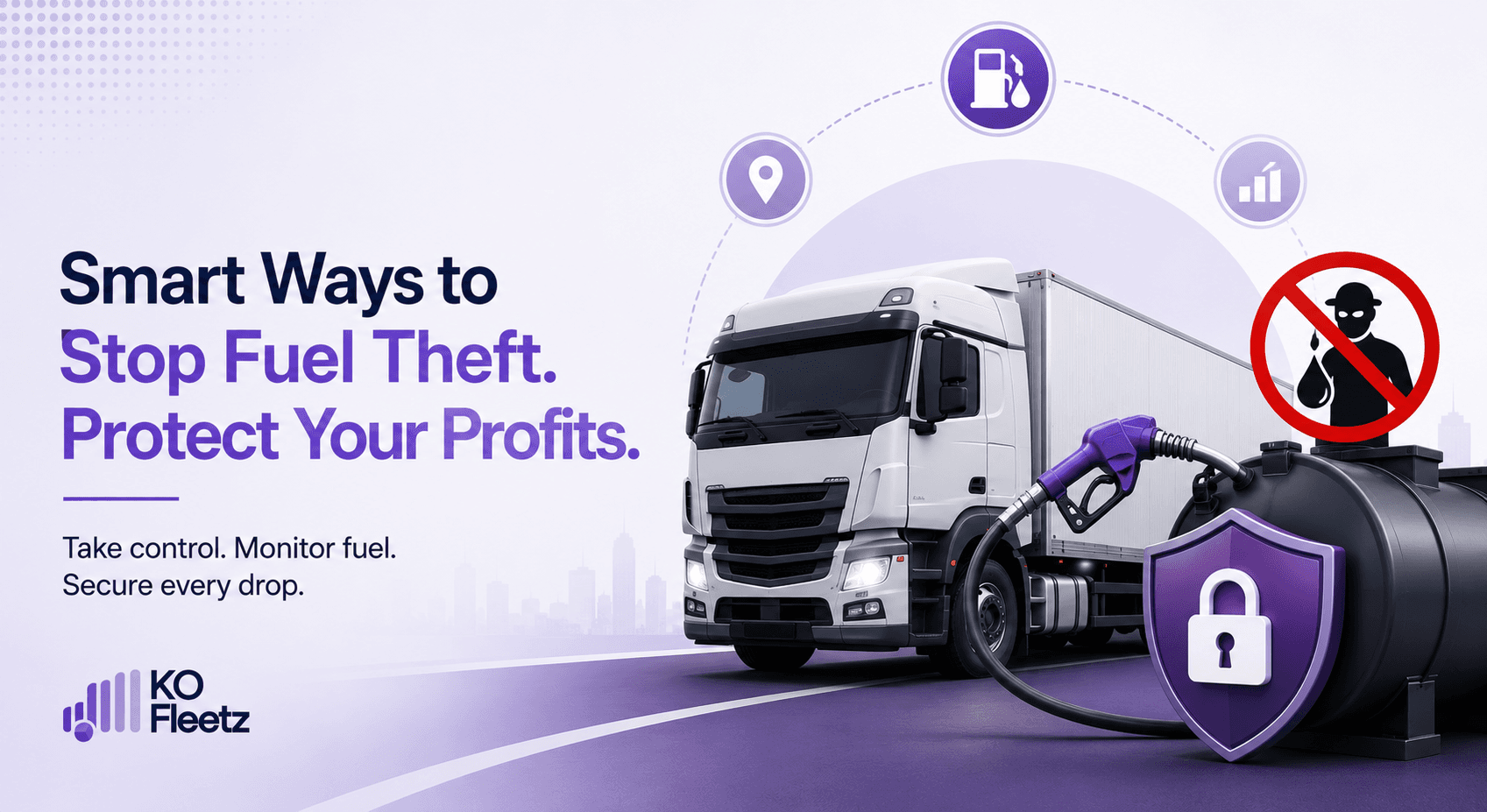
Fuel theft can quietly increase fleet operating costs and reduce profitability. Learn 10 practical fuel theft prevention strategies using fuel monitoring, fuel reconciliation, fuel management, GPS tracking, and data-driven controls.

Fuel is one of the largest operating expenses for many commercial fleets. When fuel prices increase, even small inefficiencies can have a significant impact on fleet profitability.
But not all fuel losses come from higher consumption.
Fuel theft and fuel fraud can quietly drain fleet budgets without immediately appearing as a major operational problem.
A vehicle may be assigned a certain amount of fuel, but the actual fuel consumed may be different. Fuel transactions may not match vehicle mileage. Unauthorized fuel purchases may go unnoticed. Fuel cards may be misused, or fuel may be siphoned from vehicles.
Without proper visibility, these discrepancies can be difficult to identify.
This is why fuel theft prevention should be part of every modern fleet's fuel management strategy.
By combining fuel monitoring, fuel reconciliation, GPS tracking, driver controls, transaction records, and fleet analytics, businesses can identify unusual fuel activity and take corrective action.
In this guide, we'll explore 10 ways to reduce fuel theft in commercial fleets and explain how technology can help businesses gain better control over fuel expenses.
Fuel theft occurs when fuel purchased or allocated for fleet operations is intentionally diverted, misused, or taken without authorization.
Fuel theft can happen in several ways, including:
Fuel theft isn't always obvious.
A single suspicious transaction may look insignificant, but repeated discrepancies across a large fleet can result in substantial financial losses.
Fuel theft affects more than the fuel budget.
It can also affect:
For example, if a fleet consumes more fuel than expected, management may assume the cause is poor fuel efficiency.
But the real issue could be unauthorized fuel transactions.
This is why businesses need to distinguish between:
Higher legitimate fuel consumption
and
Potential fuel fraud or fuel theft.
Effective fuel management provides the data needed to investigate the difference.
The first step in fuel theft prevention is visibility.
Every fuel transaction should ideally be associated with relevant information such as:
This creates a digital trail for fuel consumption.
Instead of simply knowing that the fleet spent ₹5 lakh on fuel, managers can determine:
Which vehicle purchased the fuel?
When was it purchased?
How much fuel was purchased?
Who was driving the vehicle?
Where did the transaction occur?
This makes suspicious transactions much easier to identify.
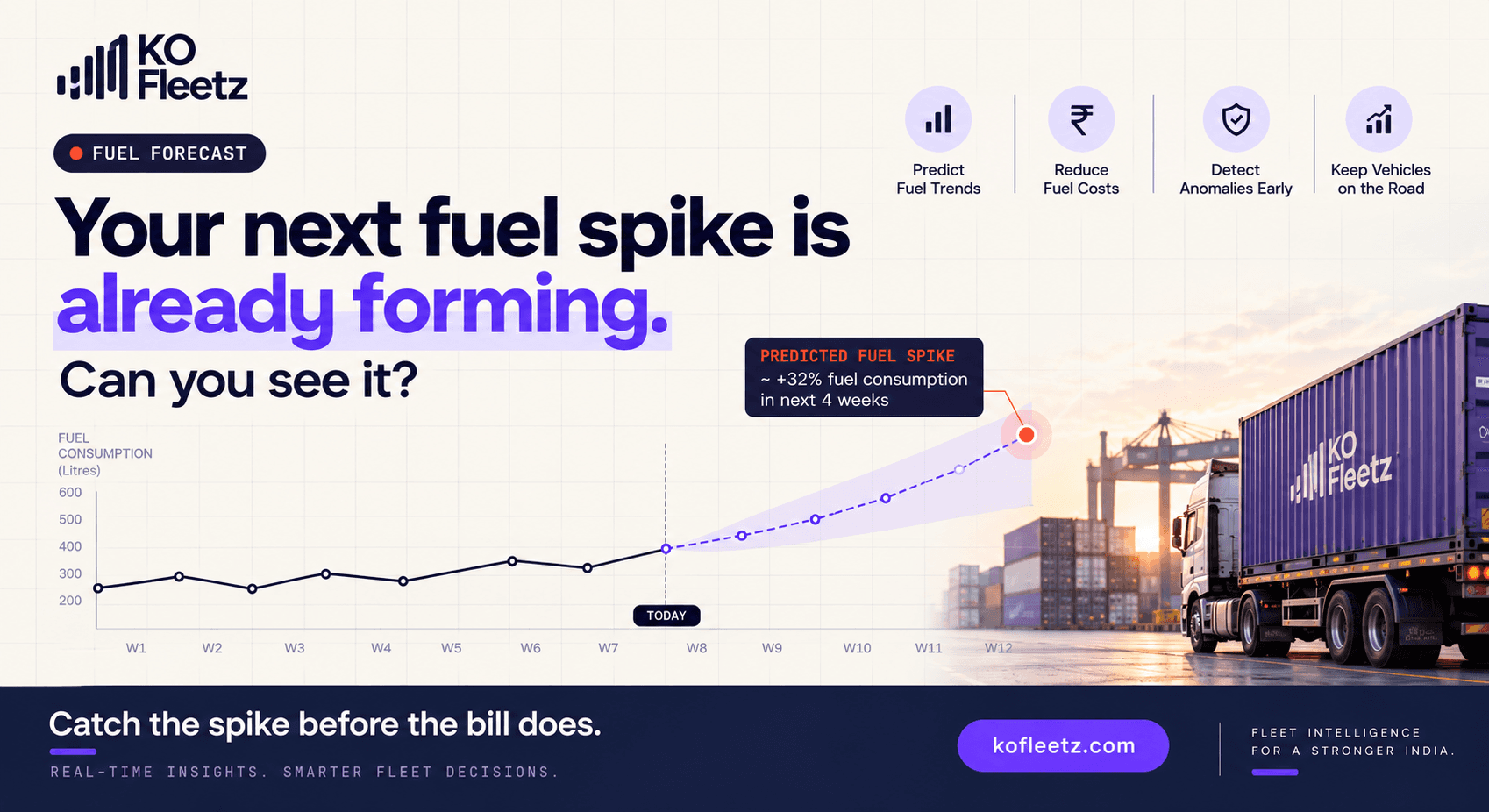
Fuel monitoring helps fleet managers understand how much fuel each vehicle is consuming.
Useful fuel metrics include:
Litres consumed Fuel cost Kilometres travelled Fuel efficiency Fuel cost per kilometre Number of fuel transactions Average fuel quantity per transaction
Vehicle A: 4.8 km/L
Vehicle B: 3.5 km/L
If both operate under similar conditions, Vehicle B deserves further investigation.
The difference could be caused by:
Driving behaviour Heavy loads Traffic Mechanical problems Excessive idling Incorrect fuel records Potential fuel misuse
Fuel monitoring helps identify these anomalies.
One of the most effective methods of fuel theft prevention is fuel reconciliation.
Fuel reconciliation compares fuel transactions against actual vehicle activity.
For example:
Fuel purchased: 80 litres
Distance travelled: 400 km
Expected efficiency: 5 km/L
Expected fuel requirement:
400 ÷ 5 = 80 litres
The numbers are reasonably aligned.
Now consider:
Fuel purchased: 120 litres
Distance travelled: 400 km
Expected efficiency: 5 km/L
Expected fuel requirement remains:
80 litres
The additional 40 litres requires investigation.
It doesn't automatically mean theft. There may be legitimate reasons, such as:
Extended idling Different load conditions Traffic Fuel tank filling Data timing differences Vehicle efficiency changes
But the discrepancy becomes visible.
That is the purpose of fuel reconciliation.
Fuel data becomes significantly more useful when combined with vehicle location information.
Imagine a fuel transaction recorded at 10:30 AM.
GPS data can help answer:
Was the vehicle operating at that time? Was it near the fuel station? Was the vehicle stationary? Was the vehicle assigned to that driver? Was the vehicle even in the same location?
This creates another layer of verification.
For example:
Fuel transaction recorded
↓
Check GPS location
↓
Vehicle was 25 km away
↓
Flag transaction for investigation
This does not automatically prove fuel theft, but it provides a strong reason to investigate.
GPS tracking can therefore complement fuel monitoring by connecting fuel transactions with actual vehicle activity.
Fuel cards can simplify fleet fuel management, but poorly controlled fuel cards can also create opportunities for misuse.
Businesses should establish clear controls around:
Which vehicle can use the card Which driver can use the card Approved fuel types Transaction limits Daily or weekly limits Approved fuel stations Maximum transaction quantity
For example, a fuel card assigned to a specific vehicle should not be freely transferable between vehicles.
Where possible, fuel transactions should be digitally associated with the relevant vehicle and driver.
This creates greater accountability.
Not every fuel transaction should be treated equally.
Fleet managers should look for unusual patterns such as:
Multiple fuel purchases within a short period Unusually large fuel quantities Fuel purchases outside normal operating hours Fuel transactions when the vehicle is inactive Repeated transactions at unusual locations Fuel purchases that exceed tank capacity Fuel purchases inconsistent with vehicle mileage
These patterns can be used to create fuel fraud alerts.
For example:
Vehicle tank capacity: 100 litres
Fuel transaction: 150 litres
This is clearly worth investigating.
Similarly, if a vehicle makes three fuel purchases within two hours, the transaction pattern should be reviewed.
A fleet manager should not evaluate fuel consumption only against a fixed benchmark.
Comparing similar vehicles can reveal anomalies.
For example:
Vehicle Distance Fuel Efficiency Vehicle A 5,000 km 1,000 L 5.0 km/L Vehicle B 5,100 km 1,020 L 5.0 km/L Vehicle C 5,050 km 1,350 L 3.7 km/L
Vehicle C has significantly higher fuel consumption.
Possible reasons include:
Mechanical issues Different operating conditions Driver behaviour Heavy loads Excessive idling Route differences Incorrect fuel records Fuel misuse
Peer comparison doesn't prove fuel theft.
Instead, it helps identify where investigation should begin.
Fuel management should not operate as an isolated process.
Fuel information becomes more useful when connected with:
Vehicle information Driver information GPS tracking Trip data Maintenance Route data Mileage Fleet analytics
For example, high fuel consumption could be related to a vehicle that also has:
Increasing maintenance costs High idle time Longer routes Lower utilization
Without connected data, managers may see only the fuel problem.
With integrated fleet data, they can investigate the broader operational picture.
Drivers play an important role in fleet fuel management.
Businesses can create clear fuel policies covering:
Approved fuel stations Fuel card usage Required odometer readings Fuel transaction documentation Fuel quantity limits Reporting suspicious transactions Vehicle refuelling procedures
Driver performance can then be evaluated using objective data rather than assumptions.
For example, if one driver's vehicles consistently show unusual fuel consumption compared with similar routes and vehicles, management can investigate the underlying cause.
The objective should be accountability supported by data, not simply punishment.
The final step is bringing fuel information together with broader fleet data.
Fleet analytics can help identify patterns across:
Fuel consumption Vehicle mileage GPS activity Driver behaviour Fuel transactions Vehicle type Routes Historical performance
This allows businesses to move from manual checking toward systematic anomaly detection.
For example:
Fuel consumption increases
↓
Analytics compares historical performance
↓
Vehicle is outside its normal range
↓
Fuel transactions are reviewed
↓
GPS location is checked
↓
Maintenance data is examined
↓
Potential cause is identified
This creates a more structured approach to fuel theft prevention.
Businesses can use the following checklist to strengthen fuel controls:
Record every fuel transaction
Fuel reconciliation is the process of comparing expected fuel consumption with actual fuel transactions.
A basic reconciliation process can look like this:
Determine how many kilometres the vehicle travelled.
Use the vehicle's expected or historical fuel efficiency.
For example:
500 km ÷ 5 km/L = 100 litres
If actual purchases equal 102 litres, the difference may be reasonable.
If actual purchases equal 150 litres, the discrepancy requires investigation.
Check:
GPS activity Idling Route conditions Vehicle load Maintenance Fuel transactions Driver activity
This approach helps separate legitimate operational variation from potential fuel fraud.
There is no single indicator that proves fuel theft.
However, certain patterns deserve investigation.
A vehicle consistently consumes more fuel than comparable vehicles.
Several fuel purchases occur within a short period.
The recorded quantity exceeds the vehicle's realistic tank capacity.
#3 Location Mismatch
The vehicle's GPS location does not correspond with the recorded fuel station.
Fuel purchases don't align with the kilometres travelled.
Fuel is purchased when the vehicle is not expected to be operating.
A vehicle's fuel consumption changes significantly without an obvious operational explanation.
These indicators should be treated as investigation triggers, not automatic proof of fraud.
One of the biggest mistakes businesses can make is assuming that every increase in fuel consumption is theft.
High fuel consumption can have legitimate operational causes.
For example:
Heavy traffic Poor road conditions Increased payload Longer routes Excessive idling Air-conditioning usage Mechanical problems Driver behaviour Seasonal conditions
This is why effective fuel management requires multiple data points.
The question shouldn't simply be:
"Why did we use more fuel?"
It should be:
"Why did fuel consumption change, and does the available data support a legitimate operational explanation?"
Modern fleet technology can connect multiple sources of information.
Provides:
Vehicle location Distance Trip activity Route information
Provides:
Fuel quantity Fuel cost Fuel transactions Consumption patterns
Provides:
Vehicle records Driver information Trip information Operational activity
Provides:
Trends Comparisons Exceptions Anomaly detection
Together, these systems create a stronger fuel management process.
For commercial fleets, fuel management becomes more effective when fuel information is connected with the broader fleet operation.
KO Fleetz provides fleet management capabilities that can connect vehicle, trip, fuel, tracking, maintenance, and operational information.
This allows fleet managers to look beyond total fuel expenditure and analyze fuel activity in relation to vehicle usage and fleet performance.
With the right data structure, businesses can monitor fuel consumption, identify unusual patterns, reconcile transactions with vehicle activity, and investigate potential discrepancies.
The goal is not simply to record how much fuel was purchased.
It is to understand where the fuel went, whether the consumption is reasonable, and what action should be taken when it isn't.
#3 Best Practices for Fuel Management
Effective fuel management should combine technology with clear operational policies.
Set Fuel Consumption Benchmarks
Establish expected fuel efficiency for different vehicle types and operating conditions.
Monitor Regularly
Don't wait until the end of the month to identify major discrepancies.
Reconcile Transactions
Compare fuel purchases against kilometres and vehicle activity.
Investigate Exceptions
Focus attention on unusual patterns rather than manually checking every transaction.
Maintain Accurate Vehicle Data
Tank capacity, vehicle type, fuel type, and mileage information should be accurate.
Train Drivers
Make fuel policies and refuelling procedures clear.
Review Historical Trends
A vehicle's own history can be useful for identifying sudden changes.
Connect Data Sources
Combine fuel, GPS, maintenance, trip, and vehicle data wherever possible.
What is fuel theft prevention?
Fuel theft prevention refers to the processes, controls, technology, and monitoring methods businesses use to identify and reduce unauthorized fuel usage or fuel-related fraud.
How can GPS tracking help prevent fuel theft?
GPS tracking can help verify whether a vehicle was near the reported fuel station when a transaction occurred. It can also provide distance and trip information for fuel reconciliation.
What is fuel reconciliation?
Fuel reconciliation compares actual fuel purchases with expected fuel consumption based on vehicle mileage, fuel efficiency, and operating activity.
What are common signs of fuel fraud?
Unusual fuel quantities, repeated transactions, fuel purchases that exceed tank capacity, location mismatches, and significant unexplained changes in fuel consumption can all be reasons to investigate.
Does high fuel consumption always mean fuel theft?
No. High fuel consumption can result from traffic, heavy loads, poor routes, idling, mechanical issues, driving behaviour, or other legitimate operational factors.
How does fuel monitoring improve fleet management?
Fuel monitoring provides visibility into fuel consumption, costs, transactions, and efficiency. This allows managers to identify unusual patterns and improve fuel-related decision-making.
Can fleet management software help reduce fuel theft?
Yes. When fleet management software connects vehicle, driver, fuel, GPS, and operational data, managers can improve transaction visibility and investigate discrepancies more efficiently.
Fuel theft can be difficult to detect when fuel transactions and vehicle activity are managed separately.
A stronger approach combines fuel monitoring, fuel reconciliation, GPS tracking, driver controls, fuel card policies, and fleet analytics.
The objective isn't to assume that every fuel discrepancy is fraud.
It is to create enough visibility to identify unusual activity, investigate the cause, and take appropriate action.
The process can be summarized as:
Record fuel transactions
↓
Monitor vehicle activity
↓
Reconcile fuel with mileage
↓
Identify anomalies
↓
Investigate discrepancies
↓
Improve fuel controls
For commercial fleets, effective fuel theft prevention is ultimately about creating accountability around every litre purchased and every kilometre travelled.
Better fuel visibility leads to better fuel management, stronger cost control, and a more efficient fleet.

Fleet management software for FMCG helps distributors optimize delivery routes, reduce fuel costs, improve vehicle utilization, track deliveries, and streamline daily distribution operations.

Discover how fleet management software helps manufacturing companies reduce transportation costs, improve vehicle utilization, minimize downtime, optimize fleet operations, and gain better visibility across their transportation network.

Fleet managers face challenges involving fuel costs, vehicle maintenance, driver performance, route efficiency, compliance, and operational visibility. Discover practical solutions for improving fleet operations.
A 30-minute walkthrough using your vehicles, your routes and the problems you are actually trying to solve.