Skip to content
Fuel Management

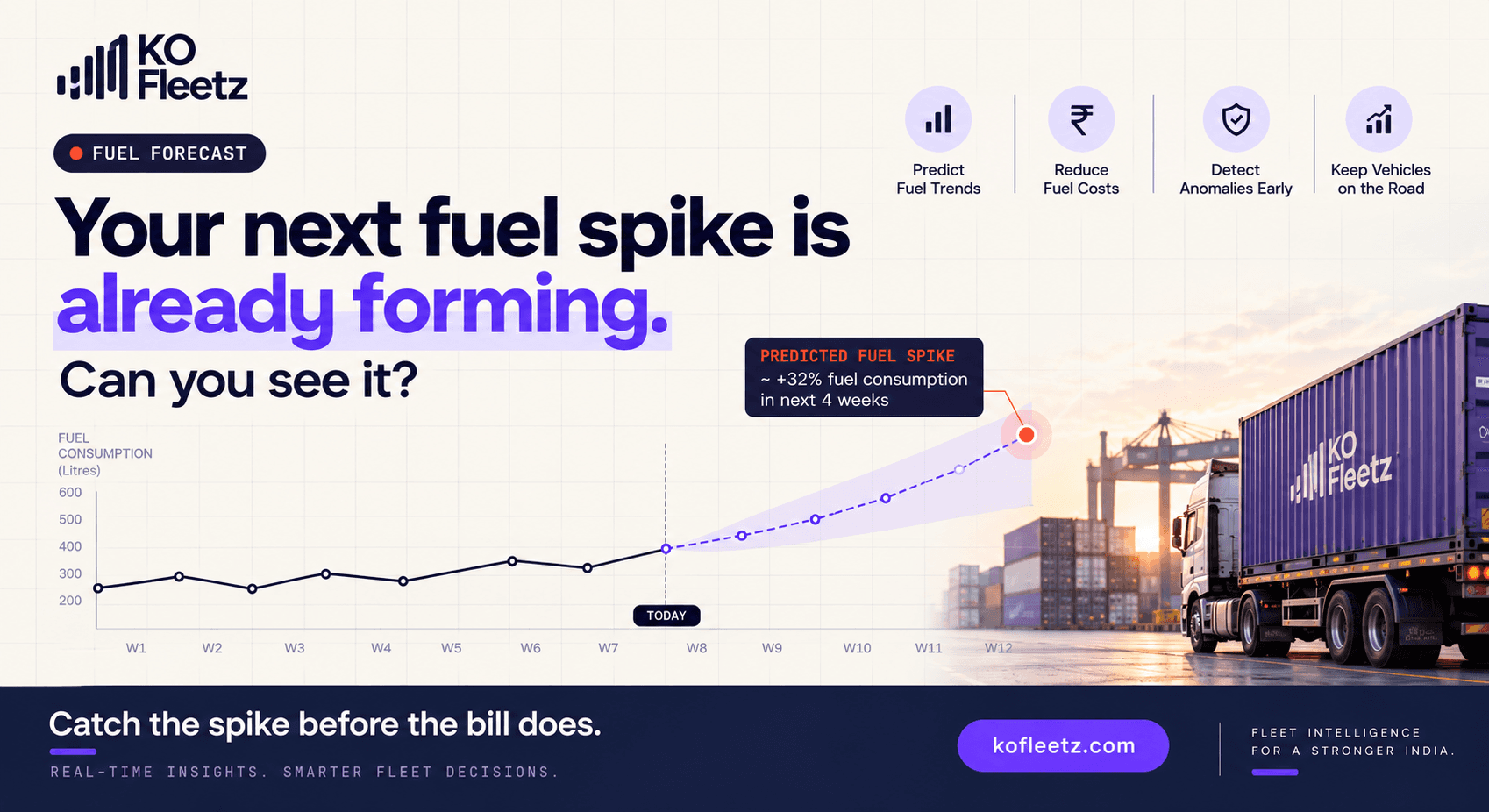
Your Next Fuel Spike Is Already Forming. Can You See It?

A fuel cost spike rarely happens without warning. Learn how fleet fuel monitoring and analytics can identify rising consumption before it becomes a major operating cost.

KO Fleetz Admin28 September 20264 min read
Your Next Fuel Spike Is Already Forming. Can You See It?
On this page

Can You See Your Next Fuel Spike Coming?

Usually, rising fuel costs leave clues before they become a major expense.

A vehicle may start consuming more fuel, routes may become less efficient, idle time may increase, or maintenance issues may affect fuel efficiency.

The challenge is identifying these signals before they become expensive.

That is where fleet fuel management and analytics can help.

What Causes a Fleet Fuel Spike?

A sudden increase in fuel costs can come from several factors:

  • Higher fuel consumption
  • Inefficient routes
  • Excessive idling
  • Heavy vehicle loads
  • Traffic and road conditions
  • Poor driving patterns
  • Vehicle maintenance issues
  • Unauthorized fuel usage
  • Changes in trip volumes

Not every fuel increase indicates fuel theft. Fleet managers need operational data to understand the actual cause.

5 Early Signs of Rising Fuel Costs

1. Fuel Consumption Is Increasing

If a vehicle begins using more fuel for similar routes and workloads, it may indicate an efficiency problem.

2. Fuel Efficiency Is Falling

A consistent reduction in kilometres per litre can be an early warning signal.

3. Idle Time Is Increasing

Unnecessary idling consumes fuel without increasing distance travelled.

4. Certain Vehicles Stand Out

If similar vehicles operate under comparable conditions but one consistently consumes more fuel, it deserves investigation.

5. Fuel Cost per Trip Is Rising

Tracking fuel cost against trip distance and activity can reveal changes that are difficult to see from fuel bills alone.

How Do You Detect a Fuel Spike Early?

The key is to connect multiple data points.

Fuel + GPS + Mileage + Trips + Vehicle Data + Analytics

Instead of asking only:

“How much fuel did we buy?”

fleet managers can ask:

“Why did this vehicle's fuel consumption increase?”

That difference turns fuel reporting into fuel intelligence.

Can Fleet Management Software Predict Fuel Problems?

Fleet management software can help identify patterns and anomalies, but it cannot guarantee that every future fuel spike will be predicted.

By comparing historical and current data, fleet analytics can highlight unusual changes in:

  • Fuel consumption
  • Fuel efficiency
  • Idle time
  • Trip costs
  • Vehicle performance
  • Route performance

These signals can help managers investigate problems earlier.

How to Reduce Fleet Fuel Costs

A practical fuel-control strategy includes:

Monitor Fuel Efficiency

Compare kilometres travelled with fuel consumed.

Track Vehicle Activity

Connect fuel data with GPS and trip information.

Identify High-Consumption Vehicles

Investigate vehicles that consistently perform outside expected ranges.

Reduce Unnecessary Idling

Monitor idle time and identify operational causes.

Maintain Vehicles

Poor vehicle condition can contribute to inefficient fuel consumption.

Look at weekly and monthly patterns rather than waiting for the fuel bill to reveal the problem.

How KO Fleetz Helps

KO Fleetz connects fuel management with vehicles, GPS tracking, trips, maintenance, drivers, expenses, and fleet analytics.

This allows businesses to see fuel consumption alongside actual fleet activity.

For example, managers can investigate whether rising fuel costs are related to specific vehicles, routes, trips, utilization, or operational patterns.

That creates a more proactive approach to fuel management.

Frequently Asked Questions

What causes sudden fuel consumption increases?

Common causes include inefficient routes, idling, traffic, heavy loads, vehicle condition, driving behavior, and unauthorized fuel usage.

How can fleet owners reduce fuel costs?

Monitor fuel efficiency, reduce unnecessary idling, optimize routes, maintain vehicles, and use fleet analytics to identify abnormal consumption.

Can GPS tracking reduce fuel costs?

GPS can provide route and vehicle activity data, but fuel optimization is stronger when GPS is combined with fuel and vehicle data.

Can AI help with fleet fuel management?

AI can analyze large amounts of fleet data and highlight unusual patterns or potential areas for investigation. It should support, rather than replace, operational review.

The Bottom Line

Your next fuel spike may not appear suddenly.

The signals can already exist in your fuel, trip, GPS, vehicle, and maintenance data.

The real question is whether your fleet management system can connect those signals early enough for your team to act.

With KO Fleetz, businesses can bring fuel management and fleet operations together to monitor consumption, identify anomalies, and make more informed decisions.

Don't wait for the fuel bill to reveal the problem. Start monitoring the signals behind it.

Share
  • Fuel Management

    10 Ways to Reduce Fuel Theft in Commercial Fleets

    Fuel theft can quietly increase fleet operating costs and reduce profitability. Learn 10 practical fuel theft prevention strategies using fuel monitoring, fuel reconciliation, fuel management, GPS tracking, and data-driven controls.

    22 Aug 202612 min

See KO Fleetz running on your fleet

A 30-minute walkthrough using your vehicles, your routes and the problems you are actually trying to solve.