Skip to content
Fleet Performance

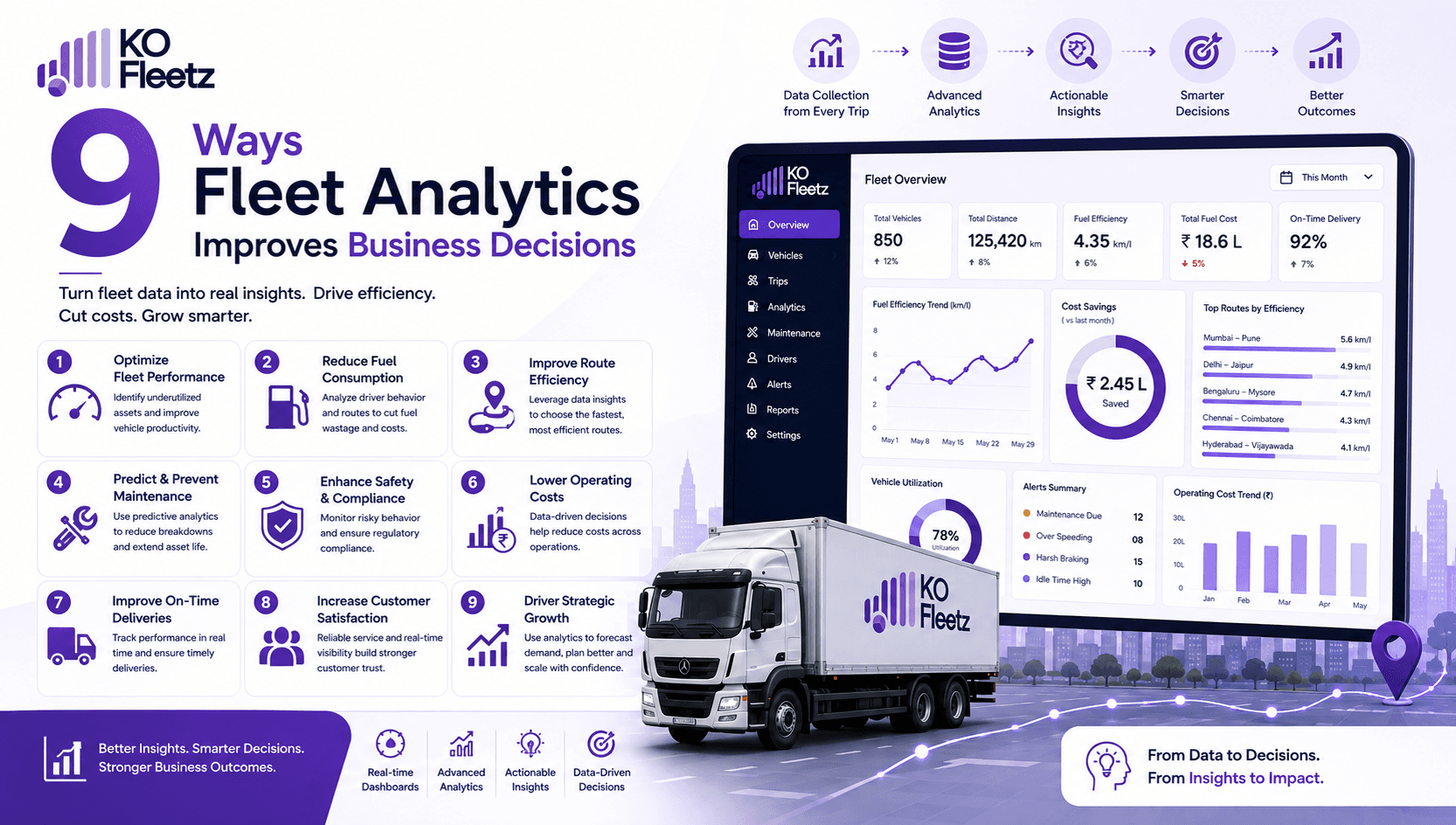
9 Ways Fleet Analytics Improves Business Decisions

Fleet analytics turns vehicle and operational data into clear insights that improve decision-making. From cost control and route efficiency to predictive maintenance and driver performance, see how fleet intelligence helps logistics businesses operate smarter.

KO Fleetz Admin19 August 20264 min read
9 Ways Fleet Analytics Improves Business Decisions
On this page

Introduction

In modern logistics and transportation, fleets generate large volumes of data every day. Location, fuel use, idle time, driver behaviour, maintenance events, route performance and delivery outcomes all create a continuous stream of information.

The challenge is not collecting data. The challenge is turning that data into decisions that improve cost, efficiency, safety and service.

This is where fleet analytics becomes essential. Fleet analytics (also called fleet data analytics or fleet intelligence) transforms raw operational data into clear, actionable insights. Instead of reacting to problems after they occur, managers can identify patterns early, understand root causes and make better choices across the business.

Below are nine practical ways fleet analytics improves business decisions.

1. Reveals True Operating Costs

Many fleets know their total fuel or maintenance spend but struggle to understand cost at a deeper level. Fleet analytics breaks costs down by vehicle, route, driver, region and time period. Managers can see which assets are expensive to run, which routes consume more fuel, and where cost per delivery is rising. This clarity supports better budgeting, pricing decisions and resource allocation.

2. Improves Vehicle Utilization Decisions

Underused vehicles still generate fixed costs. Fleet analytics highlights utilization patterns so managers can identify idle assets, uneven workload distribution and opportunities to consolidate trips. Better utilization decisions often allow companies to handle more work with the existing fleet instead of expanding capacity.

3. Supports Smarter Route and Network Planning

Operational analytics shows which routes consistently take longer, generate higher fuel use or produce more delays. Combined with delivery performance data, this information helps planners redesign routes, adjust schedules and improve overall network efficiency. Over time, route-level insights lead to lower mileage and faster delivery cycles.

4. Enables Predictive Maintenance Decisions

Reactive maintenance is expensive. Predictive analytics uses patterns in mileage, engine hours, fault codes and historical repair data to flag vehicles that are likely to need attention soon.

Managers can schedule service before failures occur, reduce unexpected downtime and extend vehicle life. This shifts maintenance from emergency response to planned action.

5. Strengthens Driver Performance and Safety Decisions

Fleet analytics tracks behaviours such as harsh braking, speeding, excessive idling and acceleration patterns. When viewed across drivers and time, these insights support targeted coaching rather than broad, ineffective policies.

Safer driving reduces accidents, insurance costs and vehicle wear while improving overall fleet reliability.

6. Improves Fuel Efficiency Decisions

Fuel is one of the largest variable costs. Fleet data analytics identifies vehicles or drivers with unusually high consumption, excessive idle time or inefficient routing.

Managers can then investigate mechanical issues, coach drivers or adjust routes. Even modest improvements in fuel efficiency deliver significant savings across a large fleet.

7. Enhances Delivery and Customer Service Decisions

On-time performance, average delivery time and failed delivery rates become visible through fleet analytics. When these metrics are linked to specific routes, vehicles or time windows, managers can make precise adjustments that improve customer experience.

Better visibility also supports more accurate ETAs and proactive communication with customers.

8. Supports Capacity and Fleet Size Decisions

Should the fleet grow, shrink or stay the same? Fleet intelligence provides the data needed to answer this question. By analysing utilization, demand patterns, seasonal trends and cost per vehicle, leaders can make evidence-based decisions about fleet size and composition instead of relying on gut feel.

9. Creates Continuous Improvement Through Trend Analysis

One-off reports have limited value. Fleet analytics reveals trends over weeks and months. Managers can track whether fuel efficiency is improving, whether downtime is falling, or whether on-time delivery is rising after specific changes.

This creates a feedback loop: measure, decide, act, and measure again. Over time, operational analytics becomes a core part of how the business improves.

How Fleet Analytics Works in Practice

Modern fleet analytics platforms collect data from GPS tracking, telematics, maintenance systems, fuel records and operational logs. The software then organises this information into dashboards, reports and alerts that highlight exceptions and opportunities.

Key capabilities include:

  • Real-time and historical performance views
  • Comparison across vehicles, drivers and routes
  • Exception alerts for high cost or poor performance
  • Predictive indicators for maintenance and risk
  • Custom reports aligned to business goals

When these insights are available in one place, decision-making becomes faster and more consistent.

How Kofleetz Supports Fleet Analytics

Kofleetz brings together vehicle tracking, operational data and performance insights so managers can move from raw information to clear decisions. The platform supports visibility into utilization, fuel patterns, route performance, maintenance needs and overall fleet efficiency.

By using Kofleetz, logistics and transport companies gain practical fleet intelligence that helps reduce costs, improve productivity and support long-term operational improvement.

Final Thoughts

Fleet analytics turns everyday operational data into a strategic advantage. Instead of managing by assumption, leaders can base decisions on clear evidence about cost, utilization, safety, maintenance and service performance.

The nine ways outlined above show how fleet data analytics, operational analytics and predictive analytics work together to improve decision quality across the business.

Organizations that treat fleet intelligence as a core management tool consistently outperform those that rely on fragmented reports or delayed information.

Ready to make better decisions with your fleet data? Explore how Kofleetz can help you turn fleet analytics into measurable business results.

Share
  • Fleet Performance

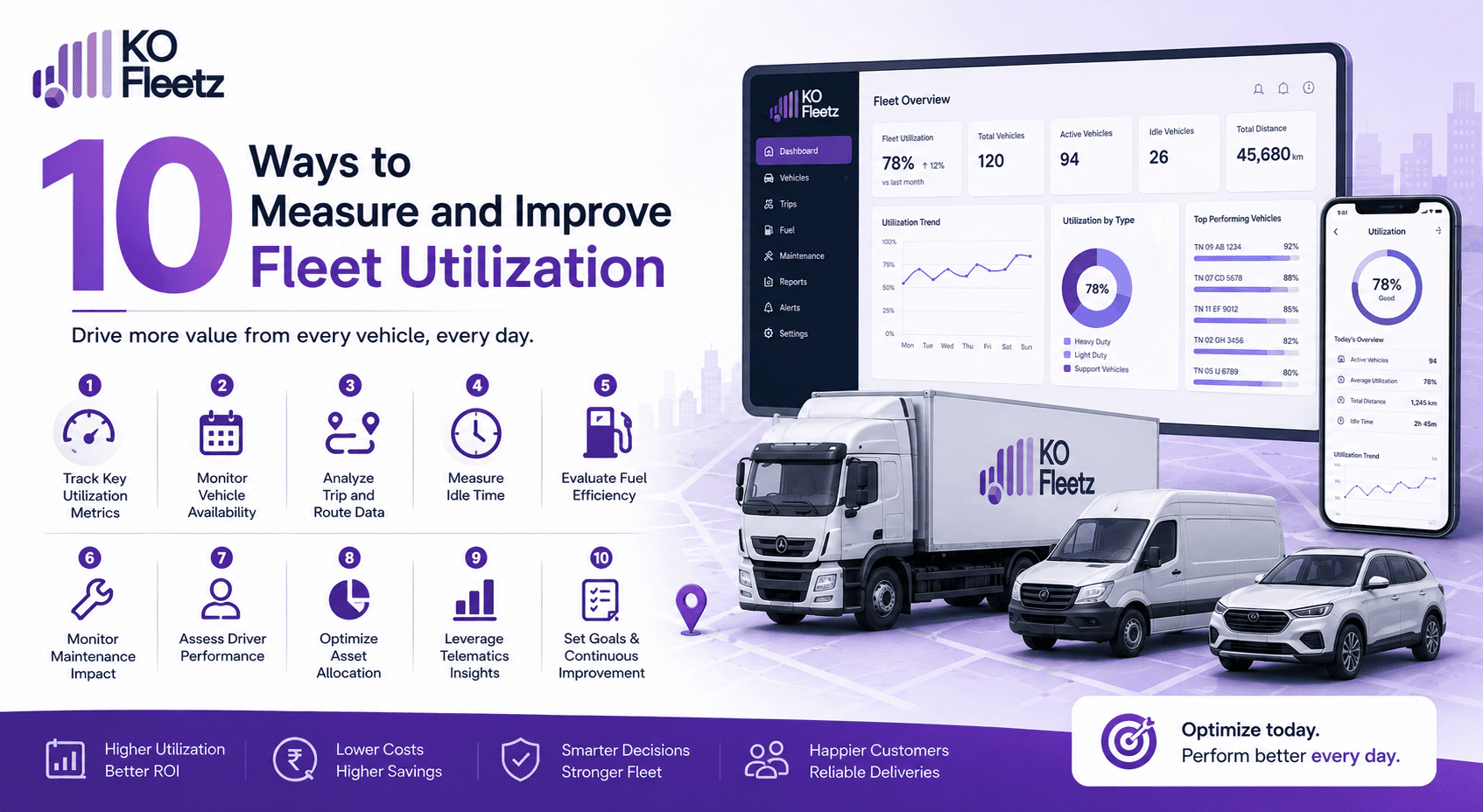
    Fleet Utilization: How to Measure and Improve It

    Fleet utilization shows how effectively your vehicles are being used. Learn how to measure it correctly and apply 10 practical ways to improve vehicle utilization, fleet efficiency, and asset utilization without adding more vehicles.

    17 Aug 202617 min
  • Fleet Analytics

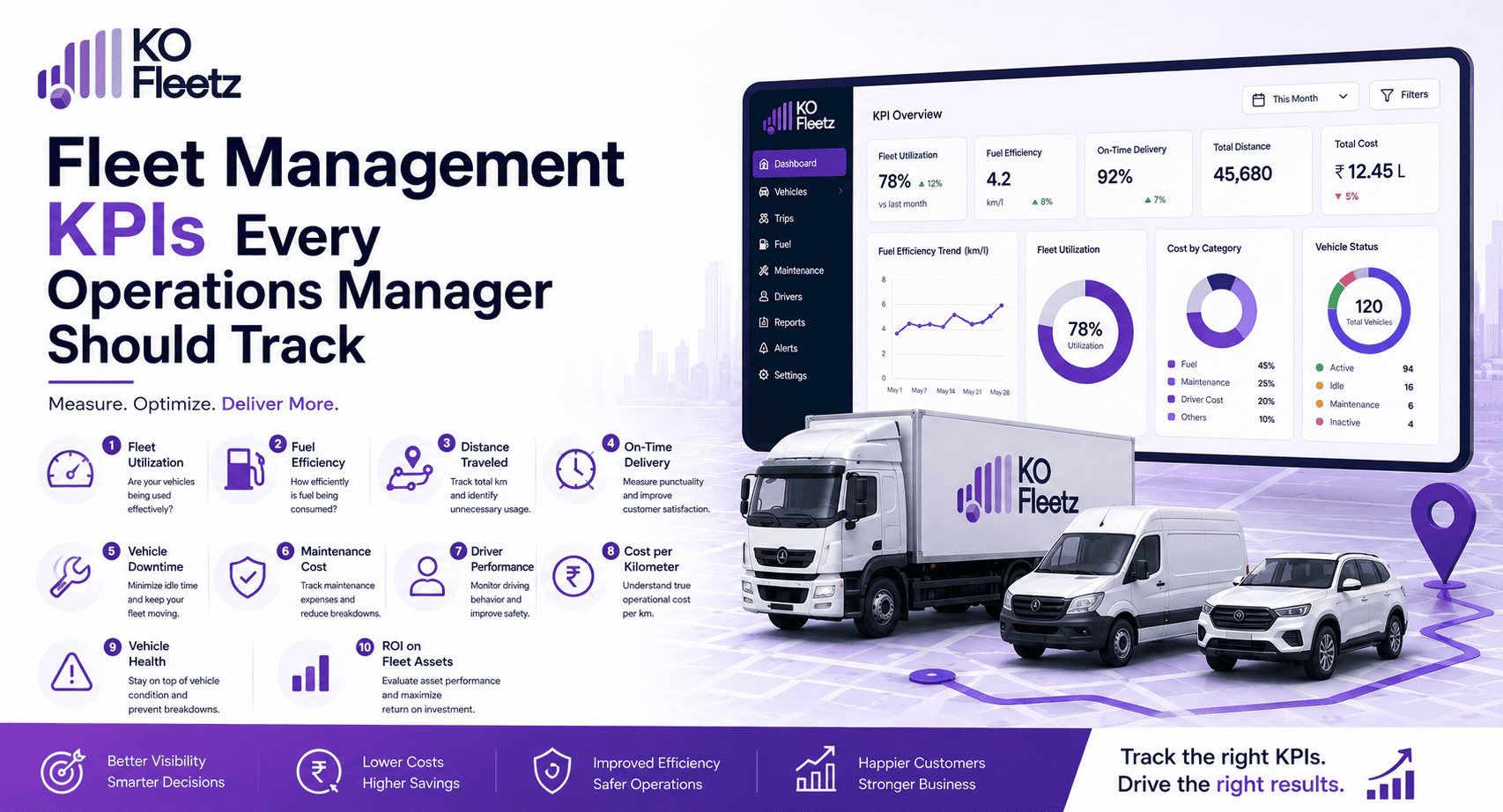
    Fleet Management KPIs Every Operations Manager Should Track

    Fleet management KPIs help operations managers measure utilization, fuel use, maintenance, safety, and delivery performance. Track these 15 key metrics to improve efficiency, control costs, and make better decisions with data.

    17 Aug 202618 min
  • Fleet Management Software

    What Is Fleet Management Software and How Does It Work?

    Fleet management software is a centralized platform that monitors vehicles, drivers, fuel, maintenance, routes and safety. It turns GPS & telematics data into real-time insights, alerts and analytics — helping fleets reduce costs, improve utilization and make smarter decisions.

    11 Aug 20264 min

See KO Fleetz running on your fleet

A 30-minute walkthrough using your vehicles, your routes and the problems you are actually trying to solve.