Skip to content
Fleet Automation

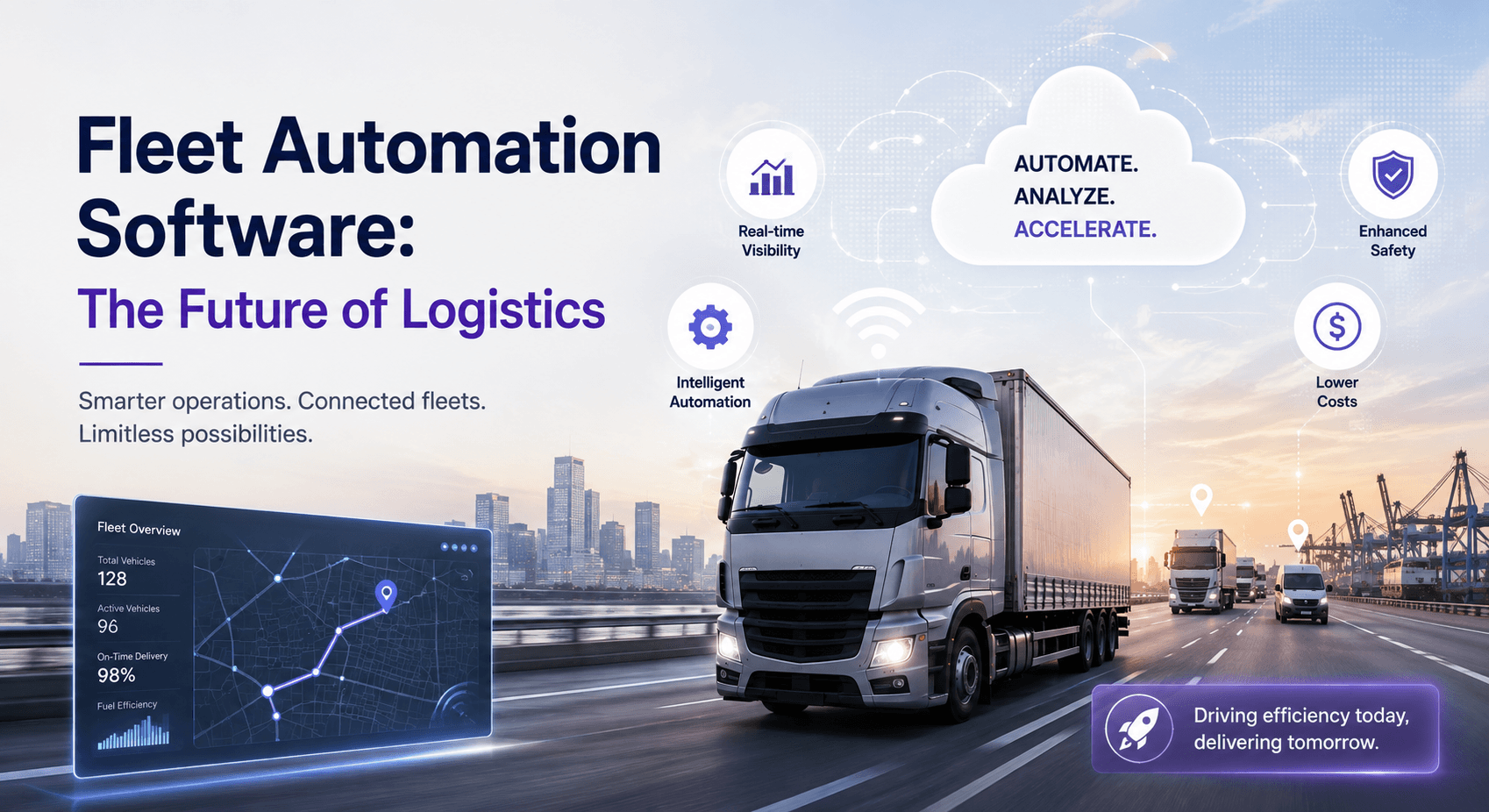
Fleet Automation Software: The Future of Logistics

Fleet automation is transforming logistics by reducing manual work, improving fleet visibility, controlling costs, and helping businesses manage transportation operations more efficiently.

KO Fleetz Admin26 August 20265 min read
Fleet Automation Software: The Future of Logistics
On this page

Introduction

Logistics operations are becoming more complex. More vehicles, higher fuel costs, tighter delivery schedules, and increasing customer expectations make manual fleet management difficult to scale.

Fleet automation helps businesses simplify these challenges by automating repetitive tasks, connecting operational data, and providing real-time visibility across fleet operations.

With the right fleet automation software, businesses can move from reactive management to proactive, data-driven transportation operations.

What Is Fleet Automation?

Fleet automation is the use of technology to automate and streamline everyday fleet activities such as vehicle tracking, dispatch, route planning, maintenance, fuel monitoring, trip management, and reporting.

Instead of managing these processes separately through spreadsheets, phone calls, and manual updates, fleet management software brings them together in one connected platform.

7 Ways Fleet Automation Improves Logistics

1. Automates Fleet Dispatch

Manual vehicle and driver assignment can consume valuable time. Automated dispatch helps operations teams assign trips based on vehicle availability, driver schedules, locations, and operational requirements.

This can reduce dispatch delays and improve resource utilization.

2. Optimizes Routes

Fleet automation software can help businesses plan more efficient routes by considering factors such as distance, delivery requirements, and vehicle availability.

Better routes can reduce unnecessary mileage, fuel consumption, and travel time.

3. Provides Real-Time Fleet Visibility

Knowing where vehicles are and what they are doing is essential for modern logistics.

Automated fleet management provides centralized visibility into vehicle movement, trips, delivery status, and operational activity, helping managers respond faster when issues occur.

4. Reduces Manual Data Entry

Fleet teams often spend hours updating trip sheets, expenses, vehicle records, and reports.

Automation reduces repetitive administrative work by capturing and organizing operational information digitally.

This allows teams to spend more time managing exceptions and improving performance.

5. Controls Fuel and Trip Costs

Fuel is one of the largest operating expenses for many commercial fleets.

Fleet automation can connect fuel transactions with vehicles, trips, mileage, and operational data. Managers can then identify unusual fuel consumption, excessive costs, and inefficient trips.

6. Automates Vehicle Maintenance

Unexpected breakdowns can disrupt deliveries and increase costs.

Automated maintenance management helps businesses track service schedules, maintenance history, upcoming requirements, and vehicle health.

This supports preventive maintenance and helps reduce avoidable downtime.

7. Improves Decision-Making

Automation creates a consistent flow of operational data.

Managers can use dashboards and reports to monitor:

  • Fleet utilization
  • Fuel efficiency
  • Cost per trip
  • Vehicle performance
  • Maintenance expenses
  • Delivery performance
  • Driver performance
  • Route efficiency

Instead of relying on assumptions, businesses can make decisions based on actual fleet data.

Why Businesses Are Investing in Fleet Automation

Fleet automation is becoming commercially important because logistics businesses need to improve efficiency without continuously increasing operational overhead.

A scalable fleet automation software solution can help organizations:

  • Reduce manual processes
  • Lower transportation costs
  • Improve vehicle utilization
  • Increase operational visibility
  • Reduce vehicle downtime
  • Improve delivery performance
  • Standardize fleet processes
  • Scale operations more efficiently

Who Needs Fleet Automation Software?

Fleet automation can benefit businesses managing:

  • Logistics and transportation fleets
  • Last-mile delivery operations
  • FMCG distribution
  • Cold-chain transportation
  • Construction fleets
  • Mining operations
  • Employee transportation
  • Rental and leasing fleets
  • Field-service vehicles
  • Port and container operations

The right solution depends on fleet size, business model, operational complexity, and integration requirements.

How to Choose Fleet Automation Software

Before investing in a fleet automation platform, businesses should evaluate whether it supports their actual operational requirements.

Look for features such as:

Fleet Tracking: Monitor vehicle locations and movement.

Trip Management: Plan, assign, and monitor trips.

Route Optimization: Improve route efficiency and reduce unnecessary mileage.

Fuel Management: Track fuel usage and costs.

Maintenance Management: Schedule preventive maintenance and monitor vehicle expenses.

Analytics & Reporting: Convert fleet data into actionable insights.

Integration: Connect fleet operations with ERP, finance, GPS, or other business systems.

Scalability: Support additional vehicles, users, locations, and operations as the business grows.

Fleet Automation vs Manual Fleet Management

Manual Fleet ManagementFleet Automation
Spreadsheet-based processesCentralized digital workflows
Manual dispatchAutomated trip assignment
Limited visibilityReal-time operational visibility
Reactive maintenancePreventive maintenance
Manual reportingAutomated dashboards
Difficult cost trackingCentralized expense tracking
Slower decisionsData-driven decisions

The Future of Logistics Is Automated

Fleet automation is not simply about replacing manual tasks. It is about creating a connected transportation ecosystem where data flows between vehicles, drivers, dispatch teams, managers, and business systems.

As logistics operations grow, businesses that adopt fleet automation software can gain better control over costs, resources, and operational performance.

Conclusion

The future of logistics will depend on how efficiently businesses can manage increasingly complex transportation operations.

Fleet automation provides the technology needed to reduce manual work, improve visibility, optimize resources, control costs, and make faster decisions.

For businesses looking to modernize their fleet operations, investing in the right fleet management software can be an important step toward building a more efficient and scalable logistics operation.

Looking to automate your fleet operations?

Explore KOFleetz, a fleet management platform designed to help businesses manage trips, vehicles, drivers, fuel, maintenance, expenses, and fleet performance from a connected platform.

Talk to our team to explore fleet automation for your business.

Share
  • FMCG & Distribution

    Fleet Management Software for FMCG Distribution

    Fleet management software for FMCG helps distributors optimize delivery routes, reduce fuel costs, improve vehicle utilization, track deliveries, and streamline daily distribution operations.

    31 Aug 20262 min
  • Manufacturing

    Fleet Management Software for Manufacturing Companies

    Discover how fleet management software helps manufacturing companies reduce transportation costs, improve vehicle utilization, minimize downtime, optimize fleet operations, and gain better visibility across their transportation network.

    28 Aug 20266 min
  • Fleet Management Software

    Common Fleet Management Challenges and Solutions

    Fleet managers face challenges involving fuel costs, vehicle maintenance, driver performance, route efficiency, compliance, and operational visibility. Discover practical solutions for improving fleet operations.

    27 Aug 20265 min

See KO Fleetz running on your fleet

A 30-minute walkthrough using your vehicles, your routes and the problems you are actually trying to solve.