Skip to content
Driver Management

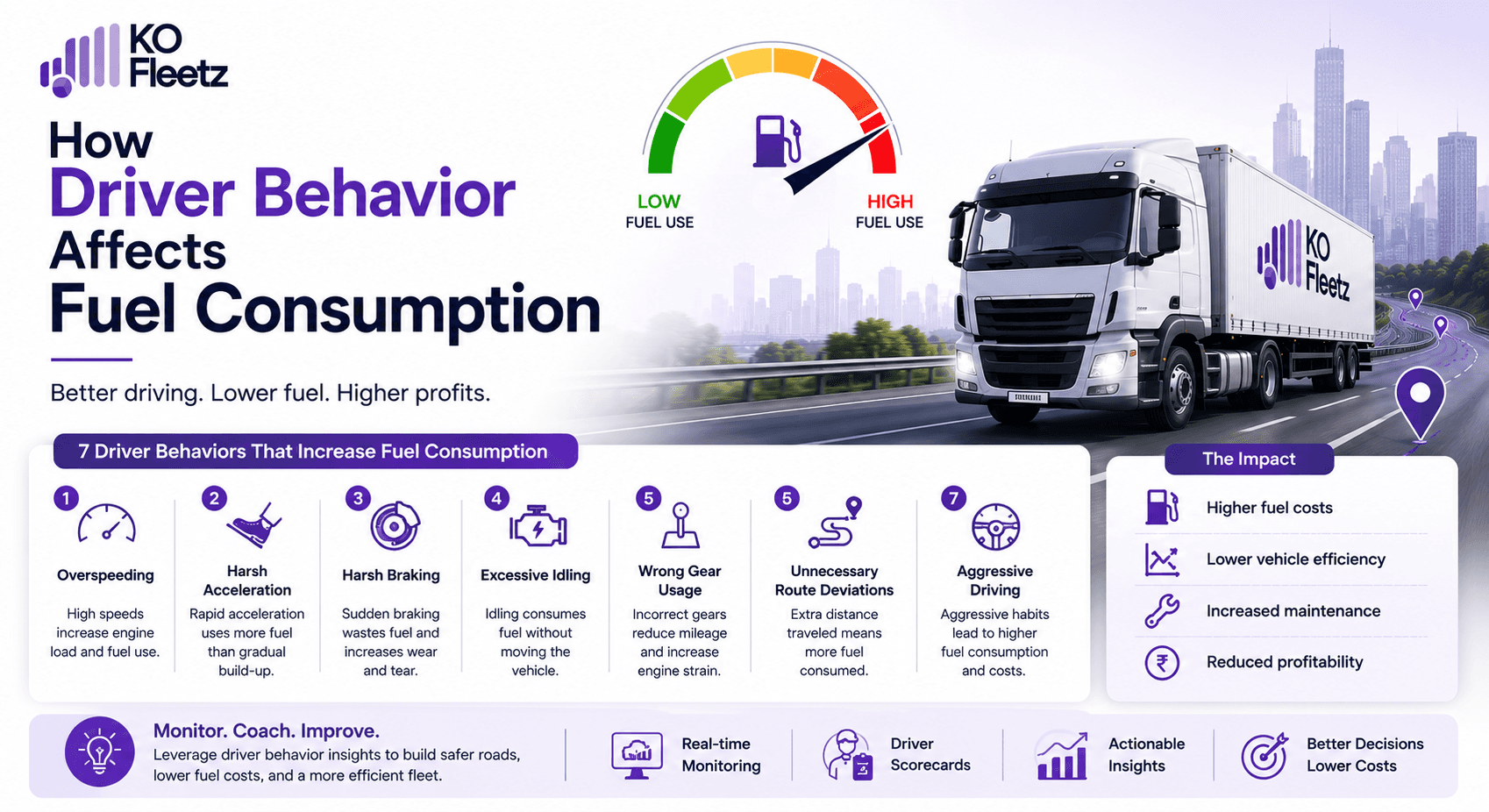
How Driver Behavior Affects Fuel Consumption

Driver behavior has a direct impact on fleet fuel consumption. Learn how speeding, harsh braking, excessive idling, and other driving habits affect fuel efficiency and how Kofleetz helps fleet operators monitor and improve driver performance.

KO Fleetz Admin20 August 20263 min read
How Driver Behavior Affects Fuel Consumption
On this page

How Driver Behavior Affects Fuel Consumption

Fuel is one of the biggest operating expenses for many commercial fleets. While fuel prices and vehicle condition matter, driver behavior can also have a significant impact on how efficiently a vehicle uses fuel.

Aggressive acceleration, excessive idling, harsh braking, speeding, and poor driving habits can increase fuel consumption and vehicle wear.

With fleet tracking, driver monitoring, and fleet management software, fleet operators can identify inefficient driving patterns and take action to improve fuel efficiency.

8 Driver Behaviors That Increase Fleet Fuel Consumption

1. Aggressive Acceleration

Rapid acceleration requires the engine to work harder and consume more fuel. Frequent aggressive acceleration can significantly reduce fuel efficiency, especially in stop-and-go traffic.

2. Excessive Idling

Leaving the engine running while the vehicle is stationary consumes fuel without generating useful mileage.

Reducing unnecessary idling can be one of the simplest ways to improve fleet fuel efficiency.

3. Harsh Braking

Frequent harsh braking often indicates inconsistent driving patterns. After losing momentum through sudden braking, the vehicle needs additional acceleration to return to speed, resulting in unnecessary fuel consumption.

4. Overspeeding

Driving at high speeds can increase aerodynamic drag and engine load. Consistently exceeding efficient operating speeds can therefore increase fuel consumption.

5. Rapid Speed Changes

Constant acceleration and deceleration make it difficult to maintain efficient vehicle movement. Smooth and consistent driving generally supports better fuel efficiency.

6. Unnecessary Engine Revving

Excessive engine revving without a corresponding need for power wastes fuel. Monitoring unusual engine and driving patterns can help identify this behavior.

7. Poor Anticipation of Traffic

Drivers who react late to traffic signals, congestion, turns, or other road conditions may brake and accelerate more frequently.

Better anticipation helps maintain momentum and can improve overall driving efficiency.

8. Ignoring Efficient Driving Practices

Failing to follow recommended driving practices can create inconsistent driver performance across the fleet.

Without visibility into these patterns, fleet managers may not know which behaviors are increasing fuel costs.

How Driver Monitoring Improves Fuel Efficiency

Modern fleet management systems can provide visibility into driving patterns such as:

  • Harsh acceleration
  • Harsh braking
  • Overspeeding
  • Excessive idling
  • Rapid speed changes
  • Driving duration
  • Vehicle utilization

This data allows fleet managers to identify drivers or routes where fuel consumption is higher than expected.

Instead of relying only on fuel reports, managers can connect fuel consumption with actual driver behavior to understand the reasons behind inefficient fuel usage.

Driver Performance and Fuel Management

Improving fuel efficiency is not simply about asking drivers to use less fuel. It requires measurable data, consistent feedback, and ongoing performance improvement.

Fleet managers can:

Monitor → Identify → Coach → Measure → Improve

For example, if a driver consistently records excessive idling, the fleet team can identify the pattern, provide targeted coaching, and track whether fuel efficiency improves afterward.

How Kofleetz Helps Monitor Driver Behavior

[Kofleetz(https://kofleetz.com/) helps fleet operators connect vehicle and driver data to gain better visibility into day-to-day fleet performance.

With fleet tracking and analytics, managers can monitor driving patterns, identify inefficient behavior, and evaluate driver performance alongside fuel and operational data.

This helps businesses move from simply tracking fuel expenses to understanding why fuel consumption is increasing.

Final Thoughts

Fuel efficiency is influenced by more than the vehicle itself. Driver behavior can directly affect fuel consumption, vehicle wear, and overall fleet operating costs.

By monitoring behaviors such as harsh braking, aggressive acceleration, overspeeding, and excessive idling, fleet managers can identify opportunities to improve driving performance and reduce unnecessary fuel consumption.

With data-driven driver monitoring, businesses can build more efficient driving habits and create a more cost-effective fleet operation.

Share
  • FMCG & Distribution

    Fleet Management Software for FMCG Distribution

    Fleet management software for FMCG helps distributors optimize delivery routes, reduce fuel costs, improve vehicle utilization, track deliveries, and streamline daily distribution operations.

    31 Aug 20262 min
  • Manufacturing

    Fleet Management Software for Manufacturing Companies

    Discover how fleet management software helps manufacturing companies reduce transportation costs, improve vehicle utilization, minimize downtime, optimize fleet operations, and gain better visibility across their transportation network.

    28 Aug 20266 min
  • Fleet Management Software

    Common Fleet Management Challenges and Solutions

    Fleet managers face challenges involving fuel costs, vehicle maintenance, driver performance, route efficiency, compliance, and operational visibility. Discover practical solutions for improving fleet operations.

    27 Aug 20265 min

See KO Fleetz running on your fleet

A 30-minute walkthrough using your vehicles, your routes and the problems you are actually trying to solve.