Transportation Management
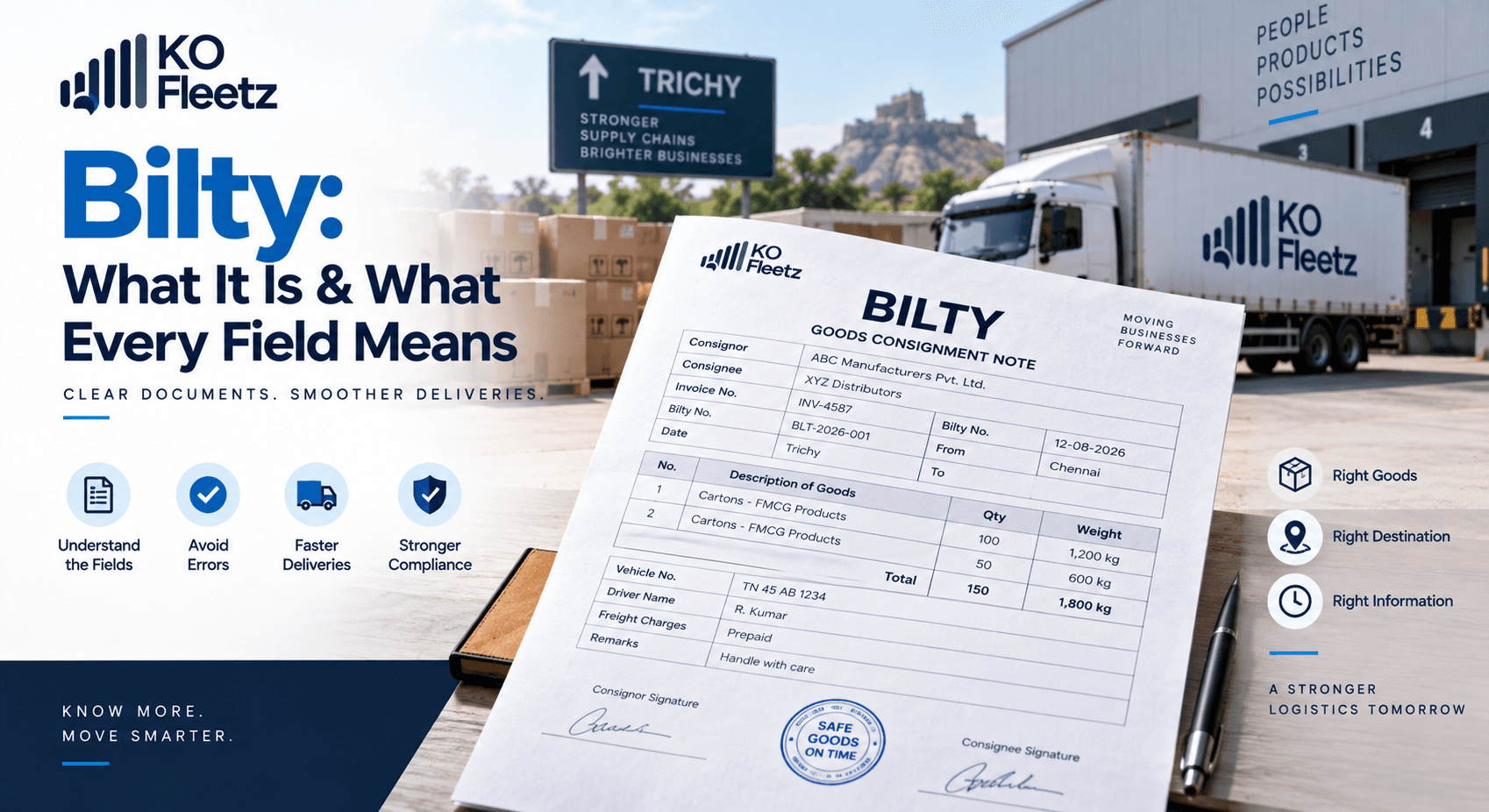
Bilty: What It Is & What Every Field Means
A bilty is a key transport document used to record goods movement. Learn what bilty means, why it matters, and what each field on a bilty document represents.
16 Sept 20265 min
Transport management software helps businesses simplify transportation management, improve fleet visibility, reduce costs, and make faster operational decisions.
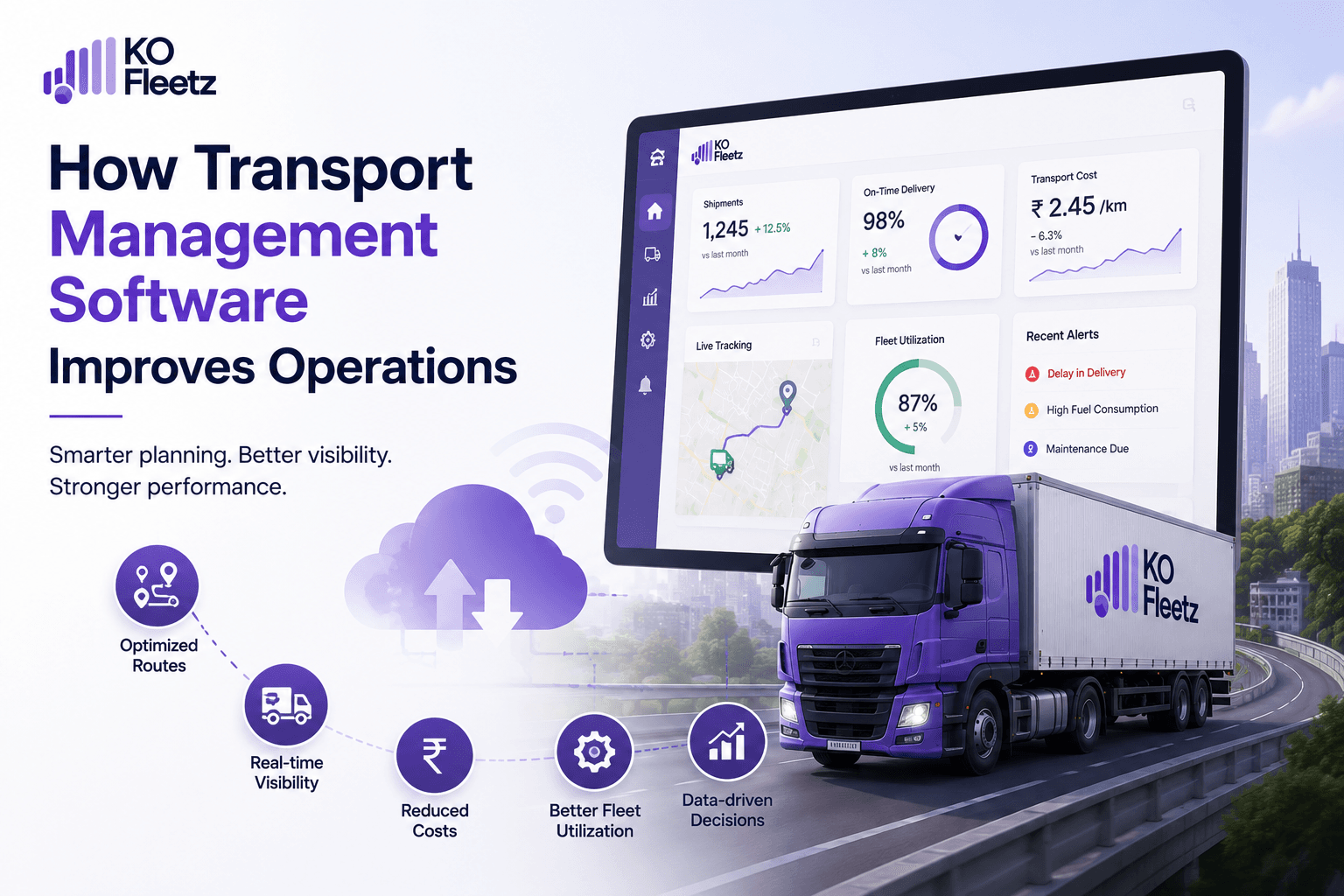
Managing transportation through spreadsheets, calls, and disconnected systems can create delays, higher costs, and limited visibility. Transport management software brings planning, dispatch, tracking, expenses, and performance data into a connected system.
A modern TMS helps businesses plan and execute transportation more efficiently while giving managers better control over daily fleet operations.
Transport management software helps planners select efficient routes based on distance, traffic, delivery priorities, and operational constraints. Better planning can reduce unnecessary travel and improve delivery efficiency.
A TMS provides visibility into fuel, tolls, driver expenses, freight costs, and other transportation spending. This helps managers identify unnecessary expenses and control cost per trip.
Instead of manually assigning vehicles and drivers, logistics software can streamline dispatch based on availability, workload, location, and operational requirements. This reduces manual effort and speeds up trip planning.
Better visibility helps businesses understand which vehicles are active, idle, underused, or overloaded. Managers can allocate vehicles more effectively and reduce unnecessary idle capacity.
A TMS provides centralized shipment and trip information, helping teams monitor transportation progress and identify delays earlier. Real-time visibility can also improve customer communication.
Transportation operations often involve repetitive data entry, documentation, trip updates, and reporting. Automation reduces administrative work and allows teams to focus on higher-value operational activities.
A centralized platform turns transportation data into useful KPIs and reports. Managers can analyze route performance, trip costs, utilization, delivery performance, and operational trends instead of relying on assumptions.
Connecting vehicle and driver information makes it easier to manage assignments, schedules, availability, and performance. This creates a more organized workflow across fleet operations.
When trip, vehicle, driver, expense, and delivery information is connected, managers can identify problems faster and take corrective action. This reduces communication gaps between dispatch, operations, finance, and management.
As fleet size and shipment volumes grow, manual processes become harder to maintain. Transport management software provides structured workflows and centralized data that can support growing logistics operations without increasing administrative complexity at the same rate.
The biggest advantage of a TMS is not simply replacing spreadsheets. It is connecting transportation activities so businesses can plan better, execute faster, monitor performance, and control costs.
For fleet-driven businesses, platforms such as KO Fleetz connect trips, vehicles, drivers, fuel, maintenance, freight, analytics, and finance into a unified fleet operations environment.
Efficient transportation management requires more than tracking vehicles. Businesses need visibility across the entire operational process.
With the right transport management software, organizations can optimize routes, automate dispatch, reduce costs, improve fleet utilization, increase delivery visibility, and make data-driven decisions.
For modern logistics and fleet-driven businesses, a connected TMS can become an important foundation for more efficient and scalable operations.
Explore KO Fleetz for connected fleet and transportation operations.
A bilty is a key transport document used to record goods movement. Learn what bilty means, why it matters, and what each field on a bilty document represents.
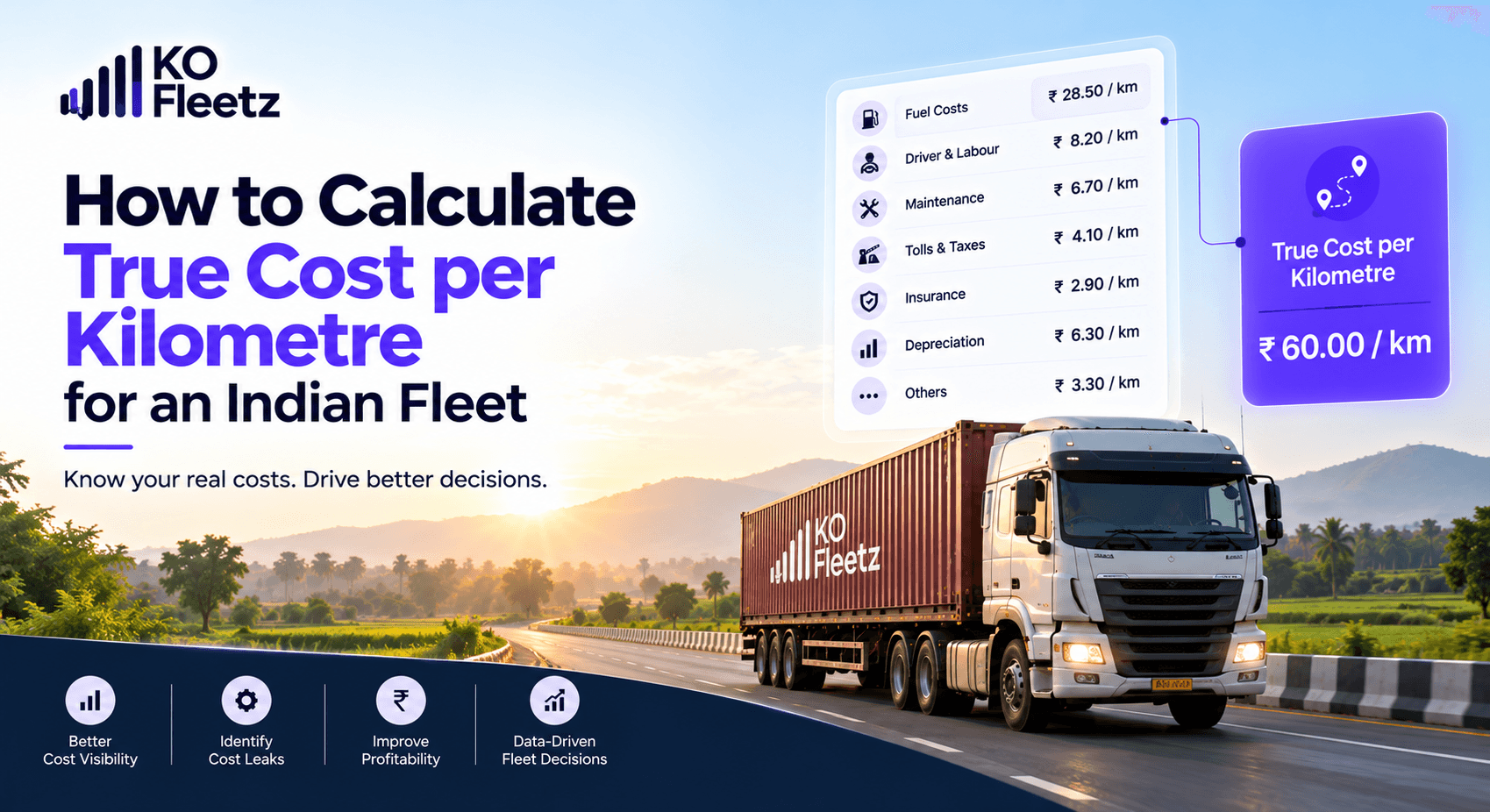
Fuel is only one part of fleet operating costs. Learn how Indian fleet owners can calculate the true cost per kilometre and identify hidden expenses affecting profitability.
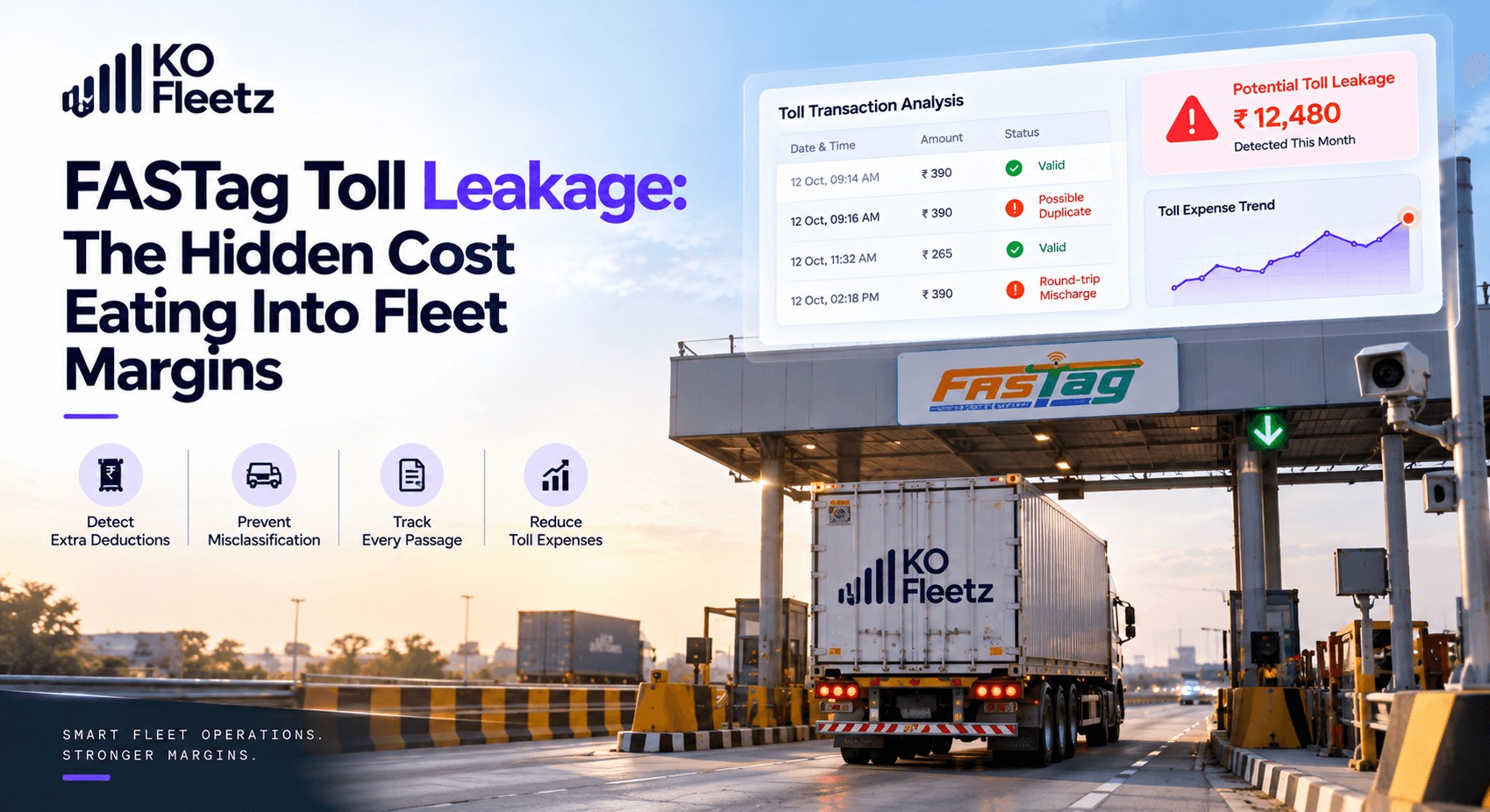
Toll overpayments and FASTag discrepancies can quietly increase fleet operating costs. Learn how automated toll reconciliation can help logistics businesses detect leakage and control route costs.
A 30-minute walkthrough using your vehicles, your routes and the problems you are actually trying to solve.