Skip to content
Fleet Technology

Why Logistics Companies Are Investing in Fleet Technology

Logistics companies are investing in fleet technology to improve visibility, control transportation costs, automate operations, optimize vehicles, and make faster data-driven decisions.

KO Fleetz Admin1 October 20263 min read
Why Logistics Companies Are Investing in Fleet Technology
On this page

Why Are Logistics Companies Investing in Fleet Technology?

Logistics operations are becoming more complex. Rising fuel costs, delivery expectations, vehicle downtime, driver management, and increasing operational data make manual fleet management difficult to scale.

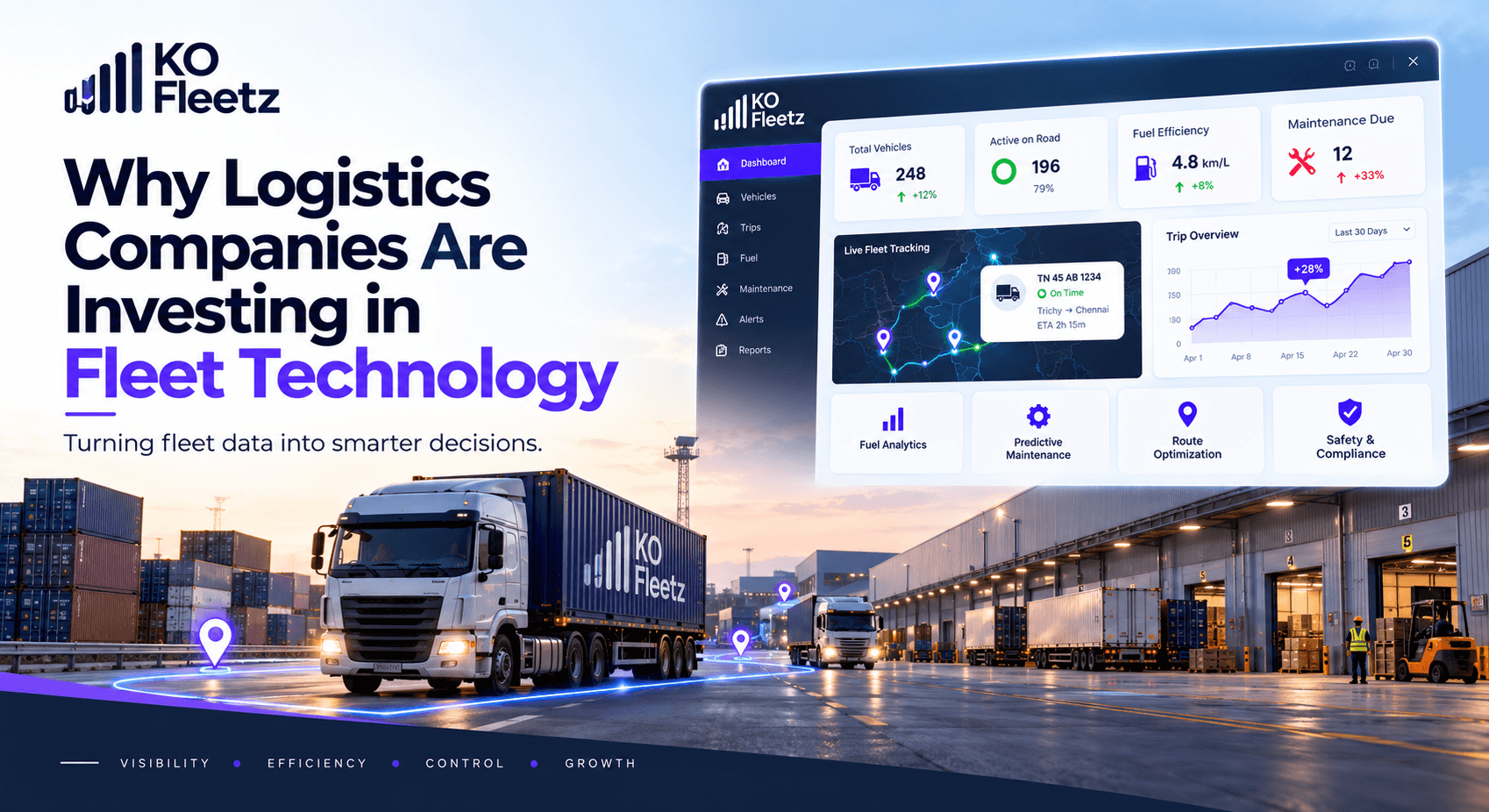
Fleet technology helps logistics companies connect vehicles, drivers, trips, fuel, maintenance, tracking, and analytics in one digital environment.

The goal is simple: move more efficiently while gaining better control over costs and operations.

What Is Fleet Technology?

Fleet technology refers to the digital tools used to monitor, manage, automate, and optimize fleet operations.

It can include:

  • GPS fleet tracking
  • Fleet management software
  • Fuel management
  • Maintenance management
  • Route optimization
  • Driver management
  • Fleet analytics
  • AI and automation
  • Digital trip management
  • Connected vehicle technology

5 Reasons Logistics Companies Are Investing

1. Better Fleet Visibility

Logistics managers need to know where vehicles are, what trips are active, and where delays are occurring.

Fleet tracking provides greater visibility into vehicle movement and trip progress.

2. Lower Operating Costs

Fuel maintenance, repairs, tolls, and inefficient routes can quickly increase transportation costs.

Fleet technology helps businesses monitor these expenses and identify operational inefficiencies.

3. More Automation

Manual trip planning, reporting, fuel records, and maintenance reminders consume operational time.

Fleet automation can reduce repetitive work and allow teams to focus on exceptions and decision-making.

4. Higher Fleet Utilization

A vehicle that sits idle represents unused capacity.

Fleet analytics helps businesses understand vehicle utilization, idle time, mileage, and trip activity so they can make better use of existing assets.

5. Data-Driven Decisions

Modern logistics businesses generate large amounts of fleet data.

Technology turns that data into useful information about:

  • Fuel efficiency
  • Vehicle performance
  • Maintenance costs
  • Trip profitability
  • Fleet utilization
  • Route efficiency
  • Operating expenses

This allows managers to make decisions based on actual operational data.

Is AI Changing Fleet Technology?

Yes. AI is increasingly being used to analyze fleet data, identify patterns, automate workflows, and support operational decisions.

For example, AI can help highlight unusual fuel consumption, identify operational anomalies, or answer questions about fleet performance.

However, AI works best when it has access to reliable and connected fleet data.

What Should Logistics Companies Look for?

Before investing in fleet technology, businesses should evaluate:

  • GPS tracking
  • Trip management
  • Fuel management
  • Maintenance
  • Driver management
  • Route optimization
  • Analytics
  • Automation
  • AI capabilities
  • Integration with existing business systems
  • Scalability

The right technology should solve operational problems rather than simply add another dashboard.

How KO Fleetz Supports Logistics Operations

KO Fleetz connects fleet tracking, vehicles, trips, drivers, fuel, maintenance, expenses, freight, compliance, and analytics in one platform.

Its AI capabilities also help businesses interact with fleet data and turn operational information into actionable insights.

This connected approach helps logistics companies move from tracking individual vehicles to managing the complete fleet operation.

Frequently Asked Questions

What is fleet technology?

Fleet technology includes digital tools used to track, manage, automate, and optimize vehicles and transportation operations.

Why is fleet technology important for logistics?

It can improve fleet visibility, reduce manual work, control costs, increase vehicle utilization, and support data-driven decisions.

Is fleet technology only for large logistics companies?

No. Small and mid-sized fleets can also use fleet technology to automate processes and gain better operational visibility.

What is the difference between fleet technology and fleet management software?

Fleet management software is one part of the broader fleet technology ecosystem. Fleet technology can also include GPS devices, telematics, sensors, AI, automation, and integrations.

Conclusion

The logistics industry is moving from manual fleet management toward connected, automated, and data-driven operations.

Fleet technology gives businesses the tools to improve visibility, control costs, optimize vehicles, reduce manual work, and make faster decisions.

For logistics companies looking to modernize their operations, KO Fleetz provides a connected fleet technology platform covering the operational areas that matter most—from vehicles and trips to fuel, maintenance, analytics, and AI.

The future of logistics is not simply more vehicles. It is smarter fleet operations.

Share

See KO Fleetz running on your fleet

A 30-minute walkthrough using your vehicles, your routes and the problems you are actually trying to solve.